so far im liking how we will work on this RP
time to sleep, romorrow the traumas will be checked
Shinka Knights OOC

04/18/2014, 05:35 AM #102
Ok Nemesis is done
Starla...
I need Ideas for her history cause I got...next to nothing.
Starla...
I need Ideas for her history cause I got...next to nothing.


04/18/2014, 02:58 PM #103
It's done. It's finally done. -_-;
Full Name: Jason Stone
Age: 20
Race: Infecta
Gender: Male
Affiliation: Jason Stone is an Infecta, so he fights not only for other Infecta, but for survival, for the ability to live without fear of Ragnarok's hatred and wrath.
Blood type: AB
Crystal(s): Magnetism. He will get another crystal(s) later on.
Abilities:
Strength - Before Jason was infected with the Infecta Virus, he was able to lift a maximum of 1,100 pounds (498.95 Kg), but since getting infected, he is now able to carry 4,400 pounds (1995.8 Kg; 1.995 metric tonnes) without armor. With his armor at its standard operating parameters, his strength is doubled, allowing him to lift 8,800 pounds (3991.61 Kg; 3.99 metric tonnes).
Speed - Jason used to be able to run at a maximum of 17 mph, but with the increase to his strength and durability, he is now able to run at about 68 mph.
Reaction Time - Jason can react 4 times faster than the average human, thanks to the virus.
Durability - Due to Jason becoming an Infecta, his body has become more durable, allowing him to survive injuries that would kill a normal human. He doesn't even flinch from normal punches, and slashing from knives causes only minor scrapes. The only real way to kill him is to aim for the head or the heart. As
Intelligence - Jason is a very intelligent individual and has a remarkable understanding of nanotechnology. Due to his training in the Army, he is well versed in military tactics, and shows flexibility when dealing with problems.
Gear:
Armor
Armor Layers
Second layer is an atom-thin sheet of nanofiber used not only for minor protection, but also to prevent the piezoelectric film and nanomuscle from touching.
Third layer is nano-muscle (possibly 750x stronger than human muscle. due to the layer of muscle being thin, it might only give a 2x boost in strength and speed) that works by applying an electric current through the material, causing it to contract. It's highly resistant to blunt-force trauma, which keeps the wearer safe. It's pretty tough, due to it having a very high tensile strength. The reverse piezoelectric muscle has four layers. The core is the nanomuscle itself, the inner layer is a 1 atom thick sheet of electrical insulation, the middle layer is a thin, flexible piezoelectric film, and the outer layer is another 1 atom thick layer of electrical insulation, to prevent the piezoelectric layers from touching each other. Each nano-muscle fiber is coated in these layers. When the nanomuscles contract, it distorts/deforms the piezoelectric film, which generates an electric current. This reduces the amount of power drained from the Graphene batteries, and allows the artificial muscles to help in powering the suit and charging the batteries.
Fourth layer is a hydrostatic gel that can alter its density to allow the user to survive blunt impacts that would kill unarmored people. When an electric current is applied to the hydrostatic gel, it increases its density, and without an electric current, it can allow the user to float in water. Strangely enough this gel can also negate G-forces, protecting the user from the effects of gravity. (Halo inspired :p)
Fifth layer is another atom-thin sheet of nanofiber used not only for minor protection, but also to prevent the hydrostatic gel and aerogel from touching.
Sixth layer is an advanced super-hydrophobic Aerogel that can also withstand electricity. This is mainly used to mask heat signatures and add extra electric/heat protection to the user. Aerogel is a very powerful heat insulator because it prevents convection, conduction, and radiation heat transferal. It is capable of surviving temperatures of 2,192*F (1200*C) before melting.
Seventh layer is a Liquid Armor-treated carbon nanotube layer that instantaneously hardens when struck, preventing blunt-force trauma/damage from concussive blasts, and protects from bullets (not all bullets), and possibly explosions, but can not stop slower moving projectiles and blades. Swords, knives, and slow moving bullets can penetrate the liquid armor. The top-most layer of the suit that contains the liquid armor is a type of nanomaterial that is highly resistant to damage, yet flexible. Think Graphene. Due to Jason's crystal type being Magnetism, this layer had been hardened against EMPs protecting the suit from destroying itself.
Eighth layer is the armor plating itself. The armor plating is a Titanium Alloy that is stronger than steel, but about half as light. It is highly heat (up to 3034*F), electrical (3.1% the conductivity of copper), corrosion, and cold resistant. It is also only slightly paramagnetic.
Part Functions
Helmet
Targeting System - The targeting system of the armor is helpful when trying to spot enemies when they are hiding. When aiming a gun at a target, the microcomputer within the helmet syncs up with the artificial muscle of the suit and calculates where the bullet from the gun will hit. Once it has a final calculation, it gives the user feedback by adding a targeting reticle on the HUD. The targeting system adjusts in real-time, so when the user moves his aim to another target, the targeting reticle will move as well. This aids in aiming at far away targets, and should the user of the armor choose, they can change what the targeting reticle looks like in the armor's preferences program. Not only that, but when there are multiple enemies in the direction of the visor, the targeting system will add red triangles to each and every enemy.
Visor Settings and Visor - The visor is capable of normal vision, night vision, and thermal vision. The visor is strong enough to deflect bullets, lasers, explosions, and various other sources of damage, thanks to the materials they are made out of.
HUD - The visor's HUD provides the user with feedback and tactical information, such as ammo count, grenade count, the radar, the targeting reticle, the current communication channel, the carbon dioxide scrubber and oxygen supply's condition, the armor and wearer's physical condition, and various other functions. Not only that, if the user syncs up with another person with armor that has a condition sensor, the user's HUD can also show his/her teammates' condition as well. Other things that the HUD can do is record video/audio, set up chatscreens with anyone with compatible technology, show various calculations, play video/audio, set waypoints, and many, many other functions.
Radar - The suit's radar can detect objects and targets 25 meters (82 feet) away, and works by sending out radio wave pulses, then showing what it finds on the HUD. The radar's range can be adjusted in the middle of a fight, and has the ability to register allies via the suit's microcomputer, allowing it to tell the difference between ally and enemy.
Communicator - Located within the helmet is a built-in communicator that works on various frequencies, allowing it to work in most environments, including underground, depending on how far underground the user is. The communicator can use simply audio, or video, depending on what the user chooses, and can even switch communication channels. Not only that, it can even intercept and decrypt some enemy communication channels, allowing the user to listen to the enemy's' COM chatter and plan accordingly.
Rebreather and Carbon Dioxide Scrubber - Located within the helmet is the carbon dioxide scrubber, the breathing apparatus for the rebreather, and two tiny pressurized canisters that supplies the user with oxygen. The carbon dioxide scrubber is a miniature block of material that chemically reacts with carbon dioxide and converts it back into oxygen. Of course, after a certain amount of time, the carbon dioxide scrubber will lose its ability to convert carbon dioxide into oxygen, due to it's ability to chemically react with carbon dioxide being exhausted. After approximately 6 hours of operation, the carbon dioxide scrubber will be used up and will need to be changed out with a new one.
The rebreather and carbon dioxide scrubber works in unison by having the oxygen pass from the oxygen supply canisters and through the rebreather apparatus, and into the user when they breathe. After the user breathes out, the carbon dioxide passes into a CO2 scrubber, which then feeds back into the oxygen supply canisters, keeping the oxygen supply at optimal levels for 6 hours before the supply will be diminished. After that, the oxygen supply can last for 2 extra hours before it is completely exhausted.
The carbon dioxide scrubber can be changed out via a small access slot withing the helmet. When the ejection sequence for the carbon dioxide scrubber is activated, the scrubber's compartment is converted from a pressurized environment to outside pressures, and the oxygen supply is fed through a secondary system, allowing the user to breathe as they change out the scrubber. After the ejection sequence is activated, a small panel on the side of the helmet pops open with the carbon dioxide scrubber attached. After the user pulls the panel out with the scrubber attached, they can then remove the scrubber from the panel's holding slot and place a new scrubber in. Once that is finished, the user simply has to push the panel back into their helmet, and the scrubber compartment is purged and is repressurized to the rest of the suit as the secondary system is disengaged, allowing the scrubber to be used.
There is no worry about foreign contaminants when the scrubber compartment is exposed to the outside environments because of the anti-bacterial surface of the scrubber compartment. Not only that, but when the purging process is engaged, the scrubber is subjected to temperatures of over 10,000*F for just enough time to destroy any foreign contaminants, incinerating everything inside of the compartment without damaging the helmet. After that, the compartment is quickly depressurized into a vacuum, sucking all of the remains out of the compartment and expelling them outside the suit. Once that is done, the compartment is them pressurized to the same levels as the rest of the suit.
Microcomputer - Located within the helmet is the suit's microcomputer. This microcomputer is perhaps the most important and complex part of the entire suit. It is capable of performing countless functions, programs, and routines with only a small amount of power. The microcomputer reads the user's thoughts by using two nodes that stick to the user's head when the helmet is put on, and from there, it helps the user operate more effectively than the average soldier, thanks to the tactical information and aid it provides the user. The microcomputer can even place the armor into an overclocked state where the suit's processes can be increased beyond their normal operating parameters. The only downside to this is that it drains more power from the suit and has a chance of damaging the suit.
Torso
Crystal Compartment - Located within the back of the suit near the spine is the crystal storage unit, where the suit's crystal is located. Power can be drawn from the crystal to power the suit, but due to the piezoelectric materials withing the suit, this function is not needed. Instead, all of the crystal's power can be devoted to using abilities, allowing the crystal to operate more effectively and with less strain.
Micro-thruster Jets - Located on the shoulder blades and mid-back of the armor are four micro-thruster jets that can change their direction. These allow the user of the armor to perform small, quick dashes around the battlefield, giving them the ability to dodge normally unavoidable attacks and explosions. These thruster jets are powerful in short bursts and can even increase the user's jump height and distance, but they are not built for flight.
Graphene Battery - Located within the spine of the armor is the Graphene battery pack. This battery pack can store enough power to power the suit for extended periods of time, and can indefinitely power the suit when not in combat. In combat, the power drain is substantially higher, due to the armor's systems requiring more power for the increased strain, such as more power for the muscles, more power for the thrusters, and so on. As soon as the user stops performing system-intensive activities and moves around, the battery will quickly charge back up.
The battery is made of graphene and is wrapped up in a wound coil, increasing the battery's surface area, allowing it to store more power.
High Density Muscle Fibers - The suit has various clusters of dormant, high density muscle fibers located within different areas of the torso. When the user needs extra strength, these muscle fibers are activated, giving the user an increased burst of strength. Of course, this drains the battery faster than normal, meaning that it can only be used efficiently when used in small bursts.
Arms
High Density Muscle Fibers - The suit has various clusters of dormant, high density muscle fibers located within different areas of the arms. When the user needs extra strength, these muscle fibers are activated, giving the user an increased burst of strength. Of course, this drains the battery faster than normal, meaning that it can only be used efficiently when used in small bursts.
Graphene Batteries and Ultracapacitors - Located within the forearms of the armor are Graphene batteries and tiny ultracapacitors. Unlike the main battery in the armor, these batteries and ultracapacitors are used to power the shock units within the gloves. The batteries can be charged by the main battery, or they can even charge the main battery themselves. These amaller batteries are used to charge the tiny ultracapacitors, which then allow the gloves to emit a quick, yet powerful discharge of electricity when the user strikes a target.
Gloves
Shock Units and Two-Way Circuits - Located within the knuckle caps and palms of the gloves are small, but powerful shock units. Although these shock units can emit a lot of electrical energy in a small amount of time, they are used to deal with an opponent in a non-lethal manner, similar to a taser. If the user keeps a sustained grip on a particular object or target, they can either discharge electricity, or siphon electrical energy for the suit.
Sensor System - Located within the fingers and other parts of the gloves are sensors that can allow the user to feel texture, temperature, and moisture.
Knuckle Caps - The knuckles of the gloves are made up of a strong material that has been nano-engineered to be conductive in one direction. This allows the user to electrically charge their strikes, causing their punches to act like tasers. This is meant for dealing with an opponent or hostile in a non-lethal manner.
Legs
High Density Muscle Fibers - The suit has various clusters of dormant, high density muscle fibers located within different areas of the legs. When the user needs extra strength, these muscle fibers are activated, giving the user an increased burst of strength. Of course, this drains the battery faster than normal, meaning that it can only be used efficiently when used in small bursts.
"Hyper-twitch" Muscle Fibers - Unlike the muscle fibers used for strength, these muscle fibers were built for contraction speed. This allows the user to sprint faster than normal at the cost of power. They can not be activated for long amounts of time, due to the power drain on the battery. It is estimated that the user can only leave the muscle fibers active for 30 seconds before they completely drain the battery.
Boots
Piezoelectric Soles - Located within the soles of the boots are piezoelectric layers that create an electric charge when deformed by the user's footsteps. This aids in charging the Graphene battery. It is especially effective when the user stomps or falls from a great height.
Micro-thruster Jets - Located on the boots of the armor are four micro-thruster jets that can change their direction. These allow the user of the armor to perform small, quick dashes around the battlefield, giving them the ability to dodge normally unavoidable attacks and explosions. These thruster jets are powerful in short bursts and can even increase the user's jump height and distance, and can even allow the user to quickly glide around the battlefield for a short time, but they are not built for flight.
Weapons
Guns

http://pressxordie.files.wordpress.com/2010/07/games_gun1_thumb.jpg
2 ZCX-S2 Machine Pistols

http://s2.hubimg.com/u/909303_f520.jpg
GCC-60 Magnum Pistol

http://gorillaartfare.com/wp-content/uploads/2009/10/handgun3.jpg
Appearance:
Face/Bodily Appearance:
Armor:
Personality: Jason is a relatively calm and relaxed individual, and can be a pretty easy person to get along with, but when he needs to be serious, he will quickly change his attitude. Due to his previous work in the army, Jason feels a large amount of guilt over what he had done to the Infecta, and because of that, he is driven by a little bit more than just the desire to help. He feels obligated to help the Infecta, not only because he is one as well, but also because he tries to remove his guilt by doing so.
History: Jason was a child that grew up in a relatively poor family, one that couldn't afford the education he needed. Sure, he had the basic education one could get from any given public school, but nothing for what he was truly talented with: nanotechnology. He couldn't afford to go to a university, so after about a month of searching, Jason found out about the Army. He learned that if he were to go into the army and stay in for five years, they would actually pay for his education. Jason didn't really mind joining the Army. After all, perhaps he could learn something while beign enlisted, maybe pick up a skill or two. When Jason turned 18, he enlisted into the Army and was trained to be a soldier, and after a year, he was already on the front lines of battle.
One day, Jason and the group he was teamed up with was given the task of eliminating an encampment of Infecta. Now, Jason heard a lot of stories about the Infecta, but they all contrasted so much that he didn't really know what to believe. Some stories depicted The Infecta as a group of humans that were a blight to society, spreading their infection far and wide to fulfill some kind of trans-humanism agenda, while others depicted them as the unfortunate victims of a dangerous, virus that nobody knew much about. The only thing that was truly certain was that this virus gave The Infecta, these infected humans, superhuman abilities. Everything seemed to be going fine during the mission, until one of the Infecta hit Jason's position with a tank round. Jason was heavily injured and his suit had been compromised. Despite that, Jason was still able to carry out his mission with his team and was medevaced to the nearest hospital.
A couple weeks later, Jason had fully recovered and was good as new, no... better than new. Jason didn't know what they did to him as he recovered from his wounds, but he felt better than before. For some reason, he was a little bit faster, a little bit stronger, and even a little bit tougher. To be honest, Jason had a creeping fear that he had been infected with the virus, but he was tested when he was first admitted into the hospital. Little did he or the doctors know that the virus still had yet to infect Jason.
Four months had passed by, and since then, Jason had begun to show symptoms of the virus. There were cases where Jason would perform feats that seemed out of the ordinary, but not entirely out of the realm of human capability. It was only when Jason had lifted a down-turned car off of one of his fellow soldiers when people took notice. After that, it didn't take long for the government to find out where he lived. One night, Jason's house was stormed by a squad of government agents and he was kidnapped and placed in a research facility.
During the two months he spent in the research facility, Jason was subjected to various experiments, ones that told the scientists what The Infecta were truly capable of, as well as how the virus worked. They saw that there was no perceivable cure, and after they had run almost every possible test they could, they scheduled Jason for termination. Unfortunately for them, Jason and the other Infecta were not as defenseless as they thought. In a daring escape, Jason and a couple of the other Infecta fought their way through the research facility, stole back Jason's equipment, and managed to steal one of the facility's helicopters. The group of Infecta flew it as far as the helicopter's fuel tank would carry them, and after that, they parted ways.
One month had passed, and during that time, Jason had evaded and fought the government almost every day. To them, Jason was a danger to society, and even more so since he had military-grade training and equipment. One day, when he was evading the government for the hundredth time, he saw something on a store's public television that caught his eye. On the television was a news report that showed a colossal ship being made for all the Infecta. The Infecta were to be transported to space until humanity could find a cure, away from oppression, and away from people that would wish them harm. Jason thought this was his opportunity to finally be free, and after escaping yet again, he traveled to where the Infecta were to be rounded up and was guided into the ship.
Despite the fact that Jason boarded the ship with his military-grade armor and weaponry, they still let him on. Jason found this to be somewhat suspicious, but he didn't think much about it at the time. Little did he or any of the Infecta know that when they left Earth's atmosphere, they would be attacked. As the ship was attacked, Jason did all he could to save as many people as possible, and luckily for him, he was not the only person taking action. Many of the Infecta helped not only each other, but also helped to save the ship from breaking apart. As The Infecta escaped from Crux, Jason looked back at Earth, happy that he and the others had escaped, but felt sad that he was no longer welcome at his home, the only world he knew.
After four months, Jason and the other Infecta had crash landed on a new planet, only to find that there was a race of aliens called Ragnarok. This group of hostile aliens wanted nothing more but to kill off the Infecta and take the planet for themselves, but Jason and a group of Infecta saw to it that they would not go down without a fight, and continue to protect The Infecta to this very day.
Last edited by S121; 04/19/2014, 04:22 AM. Full Name: Jason Stone
Age: 20
Race: Infecta
Gender: Male
Affiliation: Jason Stone is an Infecta, so he fights not only for other Infecta, but for survival, for the ability to live without fear of Ragnarok's hatred and wrath.
Blood type: AB
Crystal(s): Magnetism. He will get another crystal(s) later on.
Abilities:
Spoiler
Strength - Before Jason was infected with the Infecta Virus, he was able to lift a maximum of 1,100 pounds (498.95 Kg), but since getting infected, he is now able to carry 4,400 pounds (1995.8 Kg; 1.995 metric tonnes) without armor. With his armor at its standard operating parameters, his strength is doubled, allowing him to lift 8,800 pounds (3991.61 Kg; 3.99 metric tonnes).
Speed - Jason used to be able to run at a maximum of 17 mph, but with the increase to his strength and durability, he is now able to run at about 68 mph.
Reaction Time - Jason can react 4 times faster than the average human, thanks to the virus.
Durability - Due to Jason becoming an Infecta, his body has become more durable, allowing him to survive injuries that would kill a normal human. He doesn't even flinch from normal punches, and slashing from knives causes only minor scrapes. The only real way to kill him is to aim for the head or the heart. As
Intelligence - Jason is a very intelligent individual and has a remarkable understanding of nanotechnology. Due to his training in the Army, he is well versed in military tactics, and shows flexibility when dealing with problems.
Gear:
Spoiler
Armor
Spoiler
Armor Layers
Spoiler
First layer is a body heat generator/Piezoelectric film that turns body heat and even the smallest movement into electrical energy. This allows the suit's tiny Graphene batteries to charge. (Might add solar cells to shoulders of armor.)Second layer is an atom-thin sheet of nanofiber used not only for minor protection, but also to prevent the piezoelectric film and nanomuscle from touching.
Third layer is nano-muscle (possibly 750x stronger than human muscle. due to the layer of muscle being thin, it might only give a 2x boost in strength and speed) that works by applying an electric current through the material, causing it to contract. It's highly resistant to blunt-force trauma, which keeps the wearer safe. It's pretty tough, due to it having a very high tensile strength. The reverse piezoelectric muscle has four layers. The core is the nanomuscle itself, the inner layer is a 1 atom thick sheet of electrical insulation, the middle layer is a thin, flexible piezoelectric film, and the outer layer is another 1 atom thick layer of electrical insulation, to prevent the piezoelectric layers from touching each other. Each nano-muscle fiber is coated in these layers. When the nanomuscles contract, it distorts/deforms the piezoelectric film, which generates an electric current. This reduces the amount of power drained from the Graphene batteries, and allows the artificial muscles to help in powering the suit and charging the batteries.
Fourth layer is a hydrostatic gel that can alter its density to allow the user to survive blunt impacts that would kill unarmored people. When an electric current is applied to the hydrostatic gel, it increases its density, and without an electric current, it can allow the user to float in water. Strangely enough this gel can also negate G-forces, protecting the user from the effects of gravity. (Halo inspired :p)
Fifth layer is another atom-thin sheet of nanofiber used not only for minor protection, but also to prevent the hydrostatic gel and aerogel from touching.
Sixth layer is an advanced super-hydrophobic Aerogel that can also withstand electricity. This is mainly used to mask heat signatures and add extra electric/heat protection to the user. Aerogel is a very powerful heat insulator because it prevents convection, conduction, and radiation heat transferal. It is capable of surviving temperatures of 2,192*F (1200*C) before melting.
Seventh layer is a Liquid Armor-treated carbon nanotube layer that instantaneously hardens when struck, preventing blunt-force trauma/damage from concussive blasts, and protects from bullets (not all bullets), and possibly explosions, but can not stop slower moving projectiles and blades. Swords, knives, and slow moving bullets can penetrate the liquid armor. The top-most layer of the suit that contains the liquid armor is a type of nanomaterial that is highly resistant to damage, yet flexible. Think Graphene. Due to Jason's crystal type being Magnetism, this layer had been hardened against EMPs protecting the suit from destroying itself.
Eighth layer is the armor plating itself. The armor plating is a Titanium Alloy that is stronger than steel, but about half as light. It is highly heat (up to 3034*F), electrical (3.1% the conductivity of copper), corrosion, and cold resistant. It is also only slightly paramagnetic.
Part Functions
Spoiler
Helmet
Spoiler
Targeting System - The targeting system of the armor is helpful when trying to spot enemies when they are hiding. When aiming a gun at a target, the microcomputer within the helmet syncs up with the artificial muscle of the suit and calculates where the bullet from the gun will hit. Once it has a final calculation, it gives the user feedback by adding a targeting reticle on the HUD. The targeting system adjusts in real-time, so when the user moves his aim to another target, the targeting reticle will move as well. This aids in aiming at far away targets, and should the user of the armor choose, they can change what the targeting reticle looks like in the armor's preferences program. Not only that, but when there are multiple enemies in the direction of the visor, the targeting system will add red triangles to each and every enemy.
Visor Settings and Visor - The visor is capable of normal vision, night vision, and thermal vision. The visor is strong enough to deflect bullets, lasers, explosions, and various other sources of damage, thanks to the materials they are made out of.
HUD - The visor's HUD provides the user with feedback and tactical information, such as ammo count, grenade count, the radar, the targeting reticle, the current communication channel, the carbon dioxide scrubber and oxygen supply's condition, the armor and wearer's physical condition, and various other functions. Not only that, if the user syncs up with another person with armor that has a condition sensor, the user's HUD can also show his/her teammates' condition as well. Other things that the HUD can do is record video/audio, set up chatscreens with anyone with compatible technology, show various calculations, play video/audio, set waypoints, and many, many other functions.
Radar - The suit's radar can detect objects and targets 25 meters (82 feet) away, and works by sending out radio wave pulses, then showing what it finds on the HUD. The radar's range can be adjusted in the middle of a fight, and has the ability to register allies via the suit's microcomputer, allowing it to tell the difference between ally and enemy.
Communicator - Located within the helmet is a built-in communicator that works on various frequencies, allowing it to work in most environments, including underground, depending on how far underground the user is. The communicator can use simply audio, or video, depending on what the user chooses, and can even switch communication channels. Not only that, it can even intercept and decrypt some enemy communication channels, allowing the user to listen to the enemy's' COM chatter and plan accordingly.
Rebreather and Carbon Dioxide Scrubber - Located within the helmet is the carbon dioxide scrubber, the breathing apparatus for the rebreather, and two tiny pressurized canisters that supplies the user with oxygen. The carbon dioxide scrubber is a miniature block of material that chemically reacts with carbon dioxide and converts it back into oxygen. Of course, after a certain amount of time, the carbon dioxide scrubber will lose its ability to convert carbon dioxide into oxygen, due to it's ability to chemically react with carbon dioxide being exhausted. After approximately 6 hours of operation, the carbon dioxide scrubber will be used up and will need to be changed out with a new one.
The rebreather and carbon dioxide scrubber works in unison by having the oxygen pass from the oxygen supply canisters and through the rebreather apparatus, and into the user when they breathe. After the user breathes out, the carbon dioxide passes into a CO2 scrubber, which then feeds back into the oxygen supply canisters, keeping the oxygen supply at optimal levels for 6 hours before the supply will be diminished. After that, the oxygen supply can last for 2 extra hours before it is completely exhausted.
The carbon dioxide scrubber can be changed out via a small access slot withing the helmet. When the ejection sequence for the carbon dioxide scrubber is activated, the scrubber's compartment is converted from a pressurized environment to outside pressures, and the oxygen supply is fed through a secondary system, allowing the user to breathe as they change out the scrubber. After the ejection sequence is activated, a small panel on the side of the helmet pops open with the carbon dioxide scrubber attached. After the user pulls the panel out with the scrubber attached, they can then remove the scrubber from the panel's holding slot and place a new scrubber in. Once that is finished, the user simply has to push the panel back into their helmet, and the scrubber compartment is purged and is repressurized to the rest of the suit as the secondary system is disengaged, allowing the scrubber to be used.
There is no worry about foreign contaminants when the scrubber compartment is exposed to the outside environments because of the anti-bacterial surface of the scrubber compartment. Not only that, but when the purging process is engaged, the scrubber is subjected to temperatures of over 10,000*F for just enough time to destroy any foreign contaminants, incinerating everything inside of the compartment without damaging the helmet. After that, the compartment is quickly depressurized into a vacuum, sucking all of the remains out of the compartment and expelling them outside the suit. Once that is done, the compartment is them pressurized to the same levels as the rest of the suit.
Microcomputer - Located within the helmet is the suit's microcomputer. This microcomputer is perhaps the most important and complex part of the entire suit. It is capable of performing countless functions, programs, and routines with only a small amount of power. The microcomputer reads the user's thoughts by using two nodes that stick to the user's head when the helmet is put on, and from there, it helps the user operate more effectively than the average soldier, thanks to the tactical information and aid it provides the user. The microcomputer can even place the armor into an overclocked state where the suit's processes can be increased beyond their normal operating parameters. The only downside to this is that it drains more power from the suit and has a chance of damaging the suit.
Torso
Spoiler
Crystal Compartment - Located within the back of the suit near the spine is the crystal storage unit, where the suit's crystal is located. Power can be drawn from the crystal to power the suit, but due to the piezoelectric materials withing the suit, this function is not needed. Instead, all of the crystal's power can be devoted to using abilities, allowing the crystal to operate more effectively and with less strain.
Micro-thruster Jets - Located on the shoulder blades and mid-back of the armor are four micro-thruster jets that can change their direction. These allow the user of the armor to perform small, quick dashes around the battlefield, giving them the ability to dodge normally unavoidable attacks and explosions. These thruster jets are powerful in short bursts and can even increase the user's jump height and distance, but they are not built for flight.
Graphene Battery - Located within the spine of the armor is the Graphene battery pack. This battery pack can store enough power to power the suit for extended periods of time, and can indefinitely power the suit when not in combat. In combat, the power drain is substantially higher, due to the armor's systems requiring more power for the increased strain, such as more power for the muscles, more power for the thrusters, and so on. As soon as the user stops performing system-intensive activities and moves around, the battery will quickly charge back up.
The battery is made of graphene and is wrapped up in a wound coil, increasing the battery's surface area, allowing it to store more power.
High Density Muscle Fibers - The suit has various clusters of dormant, high density muscle fibers located within different areas of the torso. When the user needs extra strength, these muscle fibers are activated, giving the user an increased burst of strength. Of course, this drains the battery faster than normal, meaning that it can only be used efficiently when used in small bursts.
Arms
Spoiler
High Density Muscle Fibers - The suit has various clusters of dormant, high density muscle fibers located within different areas of the arms. When the user needs extra strength, these muscle fibers are activated, giving the user an increased burst of strength. Of course, this drains the battery faster than normal, meaning that it can only be used efficiently when used in small bursts.
Graphene Batteries and Ultracapacitors - Located within the forearms of the armor are Graphene batteries and tiny ultracapacitors. Unlike the main battery in the armor, these batteries and ultracapacitors are used to power the shock units within the gloves. The batteries can be charged by the main battery, or they can even charge the main battery themselves. These amaller batteries are used to charge the tiny ultracapacitors, which then allow the gloves to emit a quick, yet powerful discharge of electricity when the user strikes a target.
Gloves
Spoiler
Shock Units and Two-Way Circuits - Located within the knuckle caps and palms of the gloves are small, but powerful shock units. Although these shock units can emit a lot of electrical energy in a small amount of time, they are used to deal with an opponent in a non-lethal manner, similar to a taser. If the user keeps a sustained grip on a particular object or target, they can either discharge electricity, or siphon electrical energy for the suit.
Sensor System - Located within the fingers and other parts of the gloves are sensors that can allow the user to feel texture, temperature, and moisture.
Knuckle Caps - The knuckles of the gloves are made up of a strong material that has been nano-engineered to be conductive in one direction. This allows the user to electrically charge their strikes, causing their punches to act like tasers. This is meant for dealing with an opponent or hostile in a non-lethal manner.
Legs
Spoiler
High Density Muscle Fibers - The suit has various clusters of dormant, high density muscle fibers located within different areas of the legs. When the user needs extra strength, these muscle fibers are activated, giving the user an increased burst of strength. Of course, this drains the battery faster than normal, meaning that it can only be used efficiently when used in small bursts.
"Hyper-twitch" Muscle Fibers - Unlike the muscle fibers used for strength, these muscle fibers were built for contraction speed. This allows the user to sprint faster than normal at the cost of power. They can not be activated for long amounts of time, due to the power drain on the battery. It is estimated that the user can only leave the muscle fibers active for 30 seconds before they completely drain the battery.
Boots
Spoiler
Piezoelectric Soles - Located within the soles of the boots are piezoelectric layers that create an electric charge when deformed by the user's footsteps. This aids in charging the Graphene battery. It is especially effective when the user stomps or falls from a great height.
Micro-thruster Jets - Located on the boots of the armor are four micro-thruster jets that can change their direction. These allow the user of the armor to perform small, quick dashes around the battlefield, giving them the ability to dodge normally unavoidable attacks and explosions. These thruster jets are powerful in short bursts and can even increase the user's jump height and distance, and can even allow the user to quickly glide around the battlefield for a short time, but they are not built for flight.
Weapons
Spoiler
Guns
Spoiler
XMA-38 Assault RifleSpoiler
The XMA-38 is an assault rifle that can switch between semi-automatic, full-auto, and burst-fire. The weapon fires 7.62mm rounds at a velocity of 990 m/s (Mach 2.9). The lower attachment of the weapon is a 25mm grenade launcher, but the rotating barrel can be swapped out for rotating barrels suited for 2 and 8 gauge shotgun shells, as well as 40mm grenades. The rifle itself can hold up to 80 rounds, thanks to the casket clips they use. This weapon is primarily used to take down armored targets and infantry at medium range.http://pressxordie.files.wordpress.com/2010/07/games_gun1_thumb.jpg
2 ZCX-S2 Machine Pistols
Spoiler
These ZCX Series 2 pistols are fully automatic machine pistols that fire .45 caliber rounds at 400 m/s (Mach 1.17). Each pistol can hold 20 rounds in each clip, thanks to the casket clips they use. These weapons are mainly used as a secondary weapon and to quickly clear out rooms of enemies at close range, but due to their light weight, size, and extremely rapid rate of fire, they can be a little inaccurate at further ranges.http://s2.hubimg.com/u/909303_f520.jpg
GCC-60 Magnum Pistol
Spoiler
The GCC-60 Magnum Pistol fires a .60 caliber round (.600 Overkill round) at 746.76 m/s (Mach 2.19). The weapon is meant mainly for heavily armored targets at short range. It's design is somewhat primitive compared to the current time's anti-tank weapon technology, but it's effectiveness as a armor-stopper is unquestionable. In order to compensate for the heavy recoil, a counterbalance has been placed on the weapon. The weapon can hold up to 7 rounds.http://gorillaartfare.com/wp-content/uploads/2009/10/handgun3.jpg
Appearance:
Spoiler
Face/Bodily Appearance:

Armor:
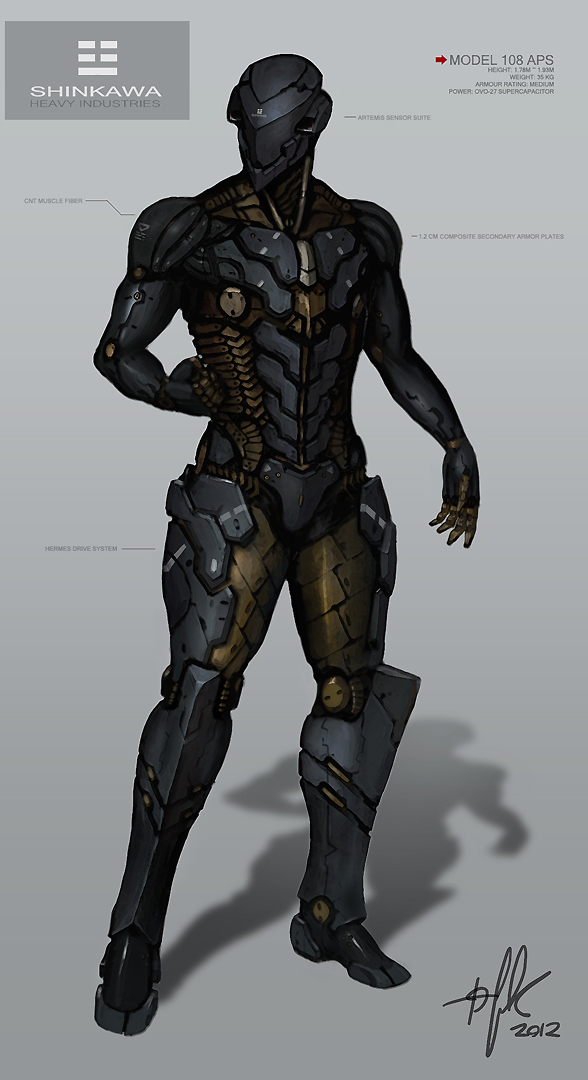


Personality: Jason is a relatively calm and relaxed individual, and can be a pretty easy person to get along with, but when he needs to be serious, he will quickly change his attitude. Due to his previous work in the army, Jason feels a large amount of guilt over what he had done to the Infecta, and because of that, he is driven by a little bit more than just the desire to help. He feels obligated to help the Infecta, not only because he is one as well, but also because he tries to remove his guilt by doing so.
History: Jason was a child that grew up in a relatively poor family, one that couldn't afford the education he needed. Sure, he had the basic education one could get from any given public school, but nothing for what he was truly talented with: nanotechnology. He couldn't afford to go to a university, so after about a month of searching, Jason found out about the Army. He learned that if he were to go into the army and stay in for five years, they would actually pay for his education. Jason didn't really mind joining the Army. After all, perhaps he could learn something while beign enlisted, maybe pick up a skill or two. When Jason turned 18, he enlisted into the Army and was trained to be a soldier, and after a year, he was already on the front lines of battle.
One day, Jason and the group he was teamed up with was given the task of eliminating an encampment of Infecta. Now, Jason heard a lot of stories about the Infecta, but they all contrasted so much that he didn't really know what to believe. Some stories depicted The Infecta as a group of humans that were a blight to society, spreading their infection far and wide to fulfill some kind of trans-humanism agenda, while others depicted them as the unfortunate victims of a dangerous, virus that nobody knew much about. The only thing that was truly certain was that this virus gave The Infecta, these infected humans, superhuman abilities. Everything seemed to be going fine during the mission, until one of the Infecta hit Jason's position with a tank round. Jason was heavily injured and his suit had been compromised. Despite that, Jason was still able to carry out his mission with his team and was medevaced to the nearest hospital.
A couple weeks later, Jason had fully recovered and was good as new, no... better than new. Jason didn't know what they did to him as he recovered from his wounds, but he felt better than before. For some reason, he was a little bit faster, a little bit stronger, and even a little bit tougher. To be honest, Jason had a creeping fear that he had been infected with the virus, but he was tested when he was first admitted into the hospital. Little did he or the doctors know that the virus still had yet to infect Jason.
Four months had passed by, and since then, Jason had begun to show symptoms of the virus. There were cases where Jason would perform feats that seemed out of the ordinary, but not entirely out of the realm of human capability. It was only when Jason had lifted a down-turned car off of one of his fellow soldiers when people took notice. After that, it didn't take long for the government to find out where he lived. One night, Jason's house was stormed by a squad of government agents and he was kidnapped and placed in a research facility.
During the two months he spent in the research facility, Jason was subjected to various experiments, ones that told the scientists what The Infecta were truly capable of, as well as how the virus worked. They saw that there was no perceivable cure, and after they had run almost every possible test they could, they scheduled Jason for termination. Unfortunately for them, Jason and the other Infecta were not as defenseless as they thought. In a daring escape, Jason and a couple of the other Infecta fought their way through the research facility, stole back Jason's equipment, and managed to steal one of the facility's helicopters. The group of Infecta flew it as far as the helicopter's fuel tank would carry them, and after that, they parted ways.
One month had passed, and during that time, Jason had evaded and fought the government almost every day. To them, Jason was a danger to society, and even more so since he had military-grade training and equipment. One day, when he was evading the government for the hundredth time, he saw something on a store's public television that caught his eye. On the television was a news report that showed a colossal ship being made for all the Infecta. The Infecta were to be transported to space until humanity could find a cure, away from oppression, and away from people that would wish them harm. Jason thought this was his opportunity to finally be free, and after escaping yet again, he traveled to where the Infecta were to be rounded up and was guided into the ship.
Despite the fact that Jason boarded the ship with his military-grade armor and weaponry, they still let him on. Jason found this to be somewhat suspicious, but he didn't think much about it at the time. Little did he or any of the Infecta know that when they left Earth's atmosphere, they would be attacked. As the ship was attacked, Jason did all he could to save as many people as possible, and luckily for him, he was not the only person taking action. Many of the Infecta helped not only each other, but also helped to save the ship from breaking apart. As The Infecta escaped from Crux, Jason looked back at Earth, happy that he and the others had escaped, but felt sad that he was no longer welcome at his home, the only world he knew.
After four months, Jason and the other Infecta had crash landed on a new planet, only to find that there was a race of aliens called Ragnarok. This group of hostile aliens wanted nothing more but to kill off the Infecta and take the planet for themselves, but Jason and a group of Infecta saw to it that they would not go down without a fight, and continue to protect The Infecta to this very day.
Originally posted by S121
Every time I see a new post on the Forum, I feel like a little kid during Christmas, all giddy.
sigpic
04/18/2014, 04:54 PM #104
Shinka Knights OOC
Full Name: Starla Monroe
Age: 21
Race: Stella
Gender: Female
Affiliation: Ragnarok
Blood type: B
Crystal(s): Magnetism, Electricty, and Fire (all three for utility)
Gear:
Utility Glove that channels the crystal Energy. Used for manipulating nanomachines through magnetism and electricity, as well as using fire for welding.
Appearance:
This

With these clothes:

Personality:
She has a calm personality and tends to be a bit of a "firecracker" at times (also tends to 'spark' into a mood and snaps at people that interrupt her while in it.)
History: Starla is a scientist that develops weaponry. Her motivation for this is as a means to obtain funding for the development of Self-Aware AI, however she has been hired to develop a new weapon for the Ragnarok. Therefore her current project, titled "Nemesis," is the attempt to achieve both her own personal goal and Ragnarok's.
Full Name: Nemesis
Age: N/A
Race: Golem/AI
Gender: Female
Affiliation: Ragnarok
Blood type: N/A
Crystal(s): Poison
Gear:
Weapons:
- Daggers: Plasma Edge
(energy type)
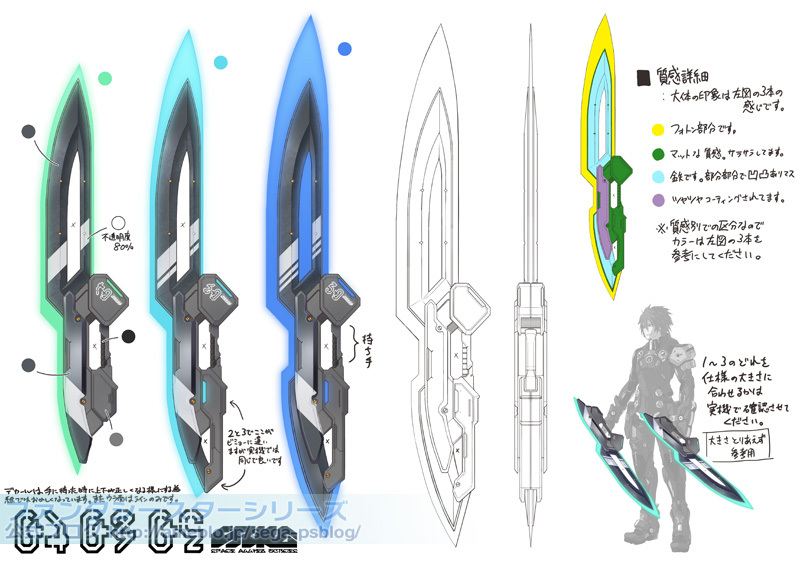
*Smaller than depicted in the scale. Might use progression upgrades.
- Gunblades: Plasma edge and shots + "blunt edge" thrusters
(shotgun type to rifle type upgrades)
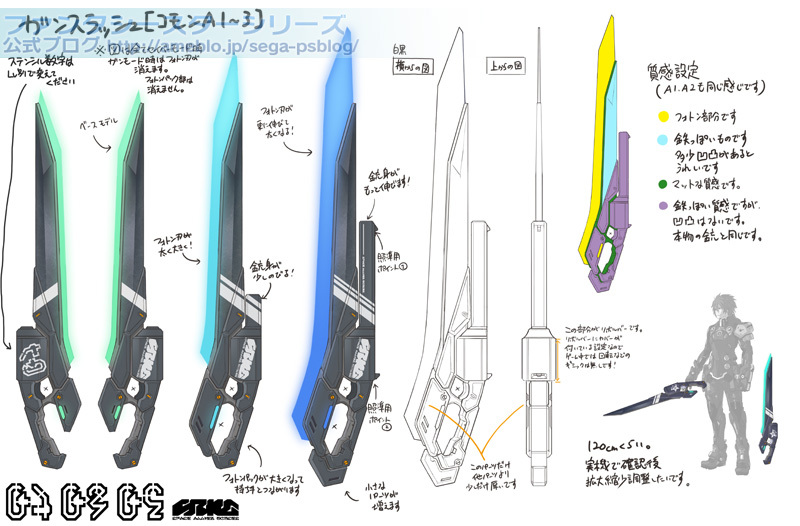
Density of material being cut determines effectiveness of the blades.
Blades can cut through "almost anything" except that anything with a density greater than 5 g*cm^-3 at tier 1 will be extremely difficult to cut.
each tier adds (1/2*tier #*(tier #+1)) g*cm^-3 to the base of 5 g*cm^-3
maximum tier is tier 4. (15 g*cm^-3)
Upgrades
Basic improvements to the weapons with 4 tiers. (4th will be red.)
Body:
- Synthetic Simulated Organic Body w/ Nano bot "blood"
- EVO Shield: Can allow the user to survive in hazardous environments for as long as the crystal can provide energy. Drains more energy than can be replenished when in such an environment and the concentration of the hazard will determine how fast (Toxic, Acidic, Extreme Heat, Extreme Pressure, etc)
Experimental Equipment:
- Biostasis module: Small container that can store biological material in stasis.
Upgrades:
Movement upgrade:
- Agility thrusters
Energy upgrade:
- Extended capacity (various levels)
Combat upgrades:
Each tier has 4 separate levels via number of drones (1 to 4)
Tier 1: Pistol Drones - Quick drones that will briefly assault targets in front of her.
Tier 2: Orbital Cutters - A fast set of energy blade drones
Tier 3: Breaker Cannon - Special: 4 charge levels - lvl 1: (1s) can cause 3rd degrees burn wounds - lvl 2: (3s) can punch a hole through soft materials - lvl 3: (6s) can punch through very hard materials - lvl 4: (10s) Tank Buster
Defense Upgrade
Military grade shielding: adds additional functionality to the EVO Shield so that it is effective in combat. i.e. able to resist gun fire/ explosives/ etc. Same limitation as EVO Shield (since it is still the EVO Shield.)
Abilities:
- Aura Burst: one time only all-or-nothing ability that overcharges EVO Shield for one absorb-all-damage-below-a-certain-threshold shield. Once used, the crystals used in the move will be reduced to 0 energy and they will not recharge naturally.
The "power level" of the crystal determines the threshold.
- Poison Edge: Daggers only - Inflict a short term poison effect to targets. (?)
- Impact Zero: Gunblade only - a powerful thrust attack to attempt to skewer a target and then create an energy burst explosion at the tip.
Appearance:
Hologram:

Android:
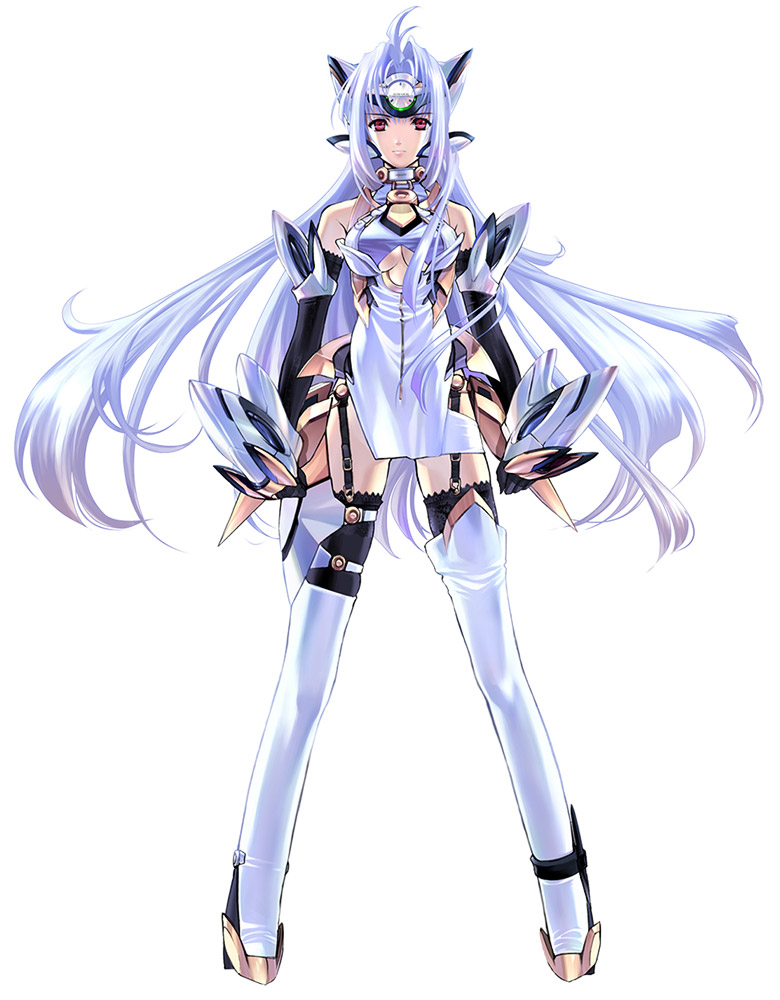
Personality: Initially lacking a personality, however upgrades to her program will add a personality later.
History: N/A *is being made in the beginning*
Last edited by Cucoo5; 04/21/2014, 02:05 PM. Full Name: Starla Monroe
Age: 21
Race: Stella
Gender: Female
Affiliation: Ragnarok
Blood type: B
Crystal(s): Magnetism, Electricty, and Fire (all three for utility)
Gear:
Utility Glove that channels the crystal Energy. Used for manipulating nanomachines through magnetism and electricity, as well as using fire for welding.
Appearance:
Spoiler
This
With these clothes:
Personality:
She has a calm personality and tends to be a bit of a "firecracker" at times (also tends to 'spark' into a mood and snaps at people that interrupt her while in it.)
History: Starla is a scientist that develops weaponry. Her motivation for this is as a means to obtain funding for the development of Self-Aware AI, however she has been hired to develop a new weapon for the Ragnarok. Therefore her current project, titled "Nemesis," is the attempt to achieve both her own personal goal and Ragnarok's.
Full Name: Nemesis
Age: N/A
Race: Golem/AI
Gender: Female
Affiliation: Ragnarok
Blood type: N/A
Crystal(s): Poison
Gear:
Weapons:
- Daggers: Plasma Edge
(energy type)
Spoiler
*Smaller than depicted in the scale. Might use progression upgrades.
- Gunblades: Plasma edge and shots + "blunt edge" thrusters
(shotgun type to rifle type upgrades)
Spoiler
Density of material being cut determines effectiveness of the blades.
Blades can cut through "almost anything" except that anything with a density greater than 5 g*cm^-3 at tier 1 will be extremely difficult to cut.
each tier adds (1/2*tier #*(tier #+1)) g*cm^-3 to the base of 5 g*cm^-3
maximum tier is tier 4. (15 g*cm^-3)
Upgrades
Basic improvements to the weapons with 4 tiers. (4th will be red.)
Body:
- Synthetic Simulated Organic Body w/ Nano bot "blood"
- EVO Shield: Can allow the user to survive in hazardous environments for as long as the crystal can provide energy. Drains more energy than can be replenished when in such an environment and the concentration of the hazard will determine how fast (Toxic, Acidic, Extreme Heat, Extreme Pressure, etc)
Experimental Equipment:
- Biostasis module: Small container that can store biological material in stasis.
Upgrades:
Movement upgrade:
- Agility thrusters
Energy upgrade:
- Extended capacity (various levels)
Combat upgrades:
Each tier has 4 separate levels via number of drones (1 to 4)
Tier 1: Pistol Drones - Quick drones that will briefly assault targets in front of her.
Tier 2: Orbital Cutters - A fast set of energy blade drones
Tier 3: Breaker Cannon - Special: 4 charge levels - lvl 1: (1s) can cause 3rd degrees burn wounds - lvl 2: (3s) can punch a hole through soft materials - lvl 3: (6s) can punch through very hard materials - lvl 4: (10s) Tank Buster
Defense Upgrade
Military grade shielding: adds additional functionality to the EVO Shield so that it is effective in combat. i.e. able to resist gun fire/ explosives/ etc. Same limitation as EVO Shield (since it is still the EVO Shield.)
Abilities:
- Aura Burst: one time only all-or-nothing ability that overcharges EVO Shield for one absorb-all-damage-below-a-certain-threshold shield. Once used, the crystals used in the move will be reduced to 0 energy and they will not recharge naturally.
The "power level" of the crystal determines the threshold.
- Poison Edge: Daggers only - Inflict a short term poison effect to targets. (?)
- Impact Zero: Gunblade only - a powerful thrust attack to attempt to skewer a target and then create an energy burst explosion at the tip.
Appearance:
Spoiler
Hologram:
Android:
Personality: Initially lacking a personality, however upgrades to her program will add a personality later.
History: N/A *is being made in the beginning*
04/18/2014, 05:54 PM #105
I finished the history and...
Nisen Honryuu:
Age: 137
Race: Ragnarokian Moko
Gender: Male
Affiliation: Mercenary (assasin, spy)
Blood type: A- (do ragnarokians even have the same blood type classifications as humans...)
Crystal(s): wind
Gear:
Knives used for either close-ranged combat or long ranged combat. The knives are thin and quite long for a knife, nearly long enough to be a short sword, but it has no crossguard, merely the hilt and the blade. They are quite fragile and are not meant for extended use, so he carries around at least half a dozen with him at all times in concealed sheaths, but they are useful for finding weak chinks in armor as well as balanced for throwing. He also has a small collection of gas bombs, mainly tear gas, both for offensive and defensive purposes. And if he ever runs out he still has the natural weapons on a moko.
Head: Simple earpiece and a pair of goggles with the normal "hi-tech" functions like night-vision and stuff. Also a hood to for face-to-face encounters.
Upper torso: A thin, flexible piece of armor made of tough material that will block glancing blows but is otherwise mainly focused on granting the wearer as much mobility as possible. Also has the majority of his concealed sheaths attached.
Gloves: fingerless gloves that channel power from the wind crystal to increase speed of attacks and force put into throwing a knife. The gloves reach to the elbow and are tough enough for him to deflect weak to average blows with his forearms, a sheath is also strapped to the inner side of each arm, he mainly uses the blades kept here as they are the easiest to access. And since they are the least concealed, there is no point keeping them away.
Lower torso: Boots that are light footed, allow for silent movement,great mobility and traction, allowing him to run up vertical surfaces to climb further or to run for short distances along vertical surfaces and sometimes even the roof if he has enough speed beforehand.
Appearance: He has the ability to change the colour of his skin, relying on it for stealth as well as how he has learnt to move silently. His normal colour would be more orangish like a barn cat, but he has a habit of blending into his surroundings, so he is almost never his own colour. Outwardly he looks like a normal human except the skin and claws. He is quite small at slightly above a meter and a half. For general appearance i guess this works: http://www.anime-planet.com/images/characters/shion_yasuoka_6429.jpg
Personality: Works for the highest bidder. He is very loyal and never renegades on a deal or promise. It is also possible to gain his loyalty and he would fight for your cause, but he is difficult to convince. A simpler way would be to convince his sister as he is the most loyal to her.
History: When he was younger, his family was involved in an incident, the result was that his parents were killed and both him and his sister were both severely hurt. He recovered but the trauma causing him to lose the ability to speak even though his vocal cords are fine. The siblings seperated for a while, the sister heading into advanced education while he became involved on the other side of the law in order to provide funds for both himself and his sister. He dotes on his sister a lot while she aids him and sometimes even asks him for "help" in certain jobs.
He carries out most transactions through technology, if you meet him face to face it is much more likely he is trying to kill you or someone near you. The same trauma also caused something to his body that hindered his growth, but he uses his small size to his advantage. His usually strikes before his target is aware of him and usually succeeds in the assassination, but even then he often needs to fight his way out due to bystanders and guards. His fighting style relies more on avoiding getting hit and hitting critical spots, thus his equipment is concentrated on speed and mobility, lacking in the defense and damage department. But what does defense matter if you can't be touched, and if you can't be touched, you can whack at your enemy as long as you much as you want, so damage doesn't matter provided you know where to hit.
He is currently aiding her sister in a few of her ventures.
...created a "supportive" character
Sonia Honryuu:
Age: 79
Race: Ragnarokian moko
Gender: Female
Affiliation:
Blood type: A-
Crystal(s): shadow
Gear:
Head: A helmet whose visor contains the same technology as her brother's. But it is also able to connect to various nearby technology and project an interface onto her retinas which she can use to manipulate the connected piece of technology. It can also project a hologram that she can manipulate.
Upper Torso: None, just normal clothing.
Gloves: Finger pads attached to each other by wires that cross over and under her hand, allowing it to sense any movement she makes with her hands, she manipulates her helmet interface and holograms with this.
Lower Torso: A wheelchair that she built herself. The back of the wheelchair contains the crystal. The helmet and gloves are connected to her wheelchair. It is able to deploy a sustained electrical field all around her to block incoming attacks, but this drains too much energy, so she prefers to manually deploy small concentrated electrical field that lasts for a short while at multiple points points in the space around her. Anything that comes into contact with the electrical field will be repelled strongly, but without much damage, just slight stinging. It can match colours with the background, and also project her from different points. For example when she is speaking her voice can come from a different direction entirely or holograms of her can be projected. This aids her in staying safe and hidden, but without her wheelchair she cannot do much.
Appearance: Looks like a normal human and also has the ability to change colour like her brother but remains a milder orange than her brother, so she merely looks tan. Is actually quite tall at about 1.7 meters, but because she is stuck in her wheelchair she is more like 1.5m, the same height as her brother. For general appearances: http://i2.photobucket.com/albums/y2/ryaken/aloe/yearend/2008/female2-nikaido.jpg
.
Personality: She is extremely smart but has communication problems. The only person she can communicate well with is her brother, so she mainly gets him to help her in her projects, be it testing a new piece of equipment or doing research. Despite her high IQ, her EQ is very low, so she makes most of her decisions without being influenced by emotions, the reason her brother trusts her so much.
History: Despite looking older than her bother due to his growth defect, she is his younger sister. When she was younger, her family was involved in an incident, the result was that her parents were killed and both she and her brother were both severely hurt. Her spine was damaged and her lower body was paralyzed. While she got used to being a cripple, she continued her schooling, using funds sent to her by her brother. She built her own wheelchair and developed most of her brother's tech for him. The knives he uses are developed by her to fit his fighting style.
She mostly acts as a strategist and supplier for her brother, helping him plan the overall operation and leaving the smaller details to him. She also often involves him in her various schemes. Currently she has requested his aid in her research of the infecta.
Nisen Honryuu:
Spoiler
Age: 137
Race: Ragnarokian Moko
Gender: Male
Affiliation: Mercenary (assasin, spy)
Blood type: A- (do ragnarokians even have the same blood type classifications as humans...)
Crystal(s): wind
Gear:
Knives used for either close-ranged combat or long ranged combat. The knives are thin and quite long for a knife, nearly long enough to be a short sword, but it has no crossguard, merely the hilt and the blade. They are quite fragile and are not meant for extended use, so he carries around at least half a dozen with him at all times in concealed sheaths, but they are useful for finding weak chinks in armor as well as balanced for throwing. He also has a small collection of gas bombs, mainly tear gas, both for offensive and defensive purposes. And if he ever runs out he still has the natural weapons on a moko.
Head: Simple earpiece and a pair of goggles with the normal "hi-tech" functions like night-vision and stuff. Also a hood to for face-to-face encounters.
Upper torso: A thin, flexible piece of armor made of tough material that will block glancing blows but is otherwise mainly focused on granting the wearer as much mobility as possible. Also has the majority of his concealed sheaths attached.
Gloves: fingerless gloves that channel power from the wind crystal to increase speed of attacks and force put into throwing a knife. The gloves reach to the elbow and are tough enough for him to deflect weak to average blows with his forearms, a sheath is also strapped to the inner side of each arm, he mainly uses the blades kept here as they are the easiest to access. And since they are the least concealed, there is no point keeping them away.
Lower torso: Boots that are light footed, allow for silent movement,great mobility and traction, allowing him to run up vertical surfaces to climb further or to run for short distances along vertical surfaces and sometimes even the roof if he has enough speed beforehand.
Appearance: He has the ability to change the colour of his skin, relying on it for stealth as well as how he has learnt to move silently. His normal colour would be more orangish like a barn cat, but he has a habit of blending into his surroundings, so he is almost never his own colour. Outwardly he looks like a normal human except the skin and claws. He is quite small at slightly above a meter and a half. For general appearance i guess this works: http://www.anime-planet.com/images/characters/shion_yasuoka_6429.jpg

Personality: Works for the highest bidder. He is very loyal and never renegades on a deal or promise. It is also possible to gain his loyalty and he would fight for your cause, but he is difficult to convince. A simpler way would be to convince his sister as he is the most loyal to her.
History: When he was younger, his family was involved in an incident, the result was that his parents were killed and both him and his sister were both severely hurt. He recovered but the trauma causing him to lose the ability to speak even though his vocal cords are fine. The siblings seperated for a while, the sister heading into advanced education while he became involved on the other side of the law in order to provide funds for both himself and his sister. He dotes on his sister a lot while she aids him and sometimes even asks him for "help" in certain jobs.
He carries out most transactions through technology, if you meet him face to face it is much more likely he is trying to kill you or someone near you. The same trauma also caused something to his body that hindered his growth, but he uses his small size to his advantage. His usually strikes before his target is aware of him and usually succeeds in the assassination, but even then he often needs to fight his way out due to bystanders and guards. His fighting style relies more on avoiding getting hit and hitting critical spots, thus his equipment is concentrated on speed and mobility, lacking in the defense and damage department. But what does defense matter if you can't be touched, and if you can't be touched, you can whack at your enemy as long as you much as you want, so damage doesn't matter provided you know where to hit.
He is currently aiding her sister in a few of her ventures.
...created a "supportive" character
Sonia Honryuu:
Spoiler
Age: 79
Race: Ragnarokian moko
Gender: Female
Affiliation:
Blood type: A-
Crystal(s): shadow
Gear:
Head: A helmet whose visor contains the same technology as her brother's. But it is also able to connect to various nearby technology and project an interface onto her retinas which she can use to manipulate the connected piece of technology. It can also project a hologram that she can manipulate.
Upper Torso: None, just normal clothing.
Gloves: Finger pads attached to each other by wires that cross over and under her hand, allowing it to sense any movement she makes with her hands, she manipulates her helmet interface and holograms with this.
Lower Torso: A wheelchair that she built herself. The back of the wheelchair contains the crystal. The helmet and gloves are connected to her wheelchair. It is able to deploy a sustained electrical field all around her to block incoming attacks, but this drains too much energy, so she prefers to manually deploy small concentrated electrical field that lasts for a short while at multiple points points in the space around her. Anything that comes into contact with the electrical field will be repelled strongly, but without much damage, just slight stinging. It can match colours with the background, and also project her from different points. For example when she is speaking her voice can come from a different direction entirely or holograms of her can be projected. This aids her in staying safe and hidden, but without her wheelchair she cannot do much.
Appearance: Looks like a normal human and also has the ability to change colour like her brother but remains a milder orange than her brother, so she merely looks tan. Is actually quite tall at about 1.7 meters, but because she is stuck in her wheelchair she is more like 1.5m, the same height as her brother. For general appearances: http://i2.photobucket.com/albums/y2/ryaken/aloe/yearend/2008/female2-nikaido.jpg

.
Personality: She is extremely smart but has communication problems. The only person she can communicate well with is her brother, so she mainly gets him to help her in her projects, be it testing a new piece of equipment or doing research. Despite her high IQ, her EQ is very low, so she makes most of her decisions without being influenced by emotions, the reason her brother trusts her so much.
History: Despite looking older than her bother due to his growth defect, she is his younger sister. When she was younger, her family was involved in an incident, the result was that her parents were killed and both she and her brother were both severely hurt. Her spine was damaged and her lower body was paralyzed. While she got used to being a cripple, she continued her schooling, using funds sent to her by her brother. She built her own wheelchair and developed most of her brother's tech for him. The knives he uses are developed by her to fit his fighting style.
She mostly acts as a strategist and supplier for her brother, helping him plan the overall operation and leaving the smaller details to him. She also often involves him in her various schemes. Currently she has requested his aid in her research of the infecta.
How many times can you die a day~?
How many times have you died a day~?
How many times have you died a day~?
04/19/2014, 02:35 AM #106
@ S1 you seem to have misunderstood part of the story. Ragnarok did not exist on earth, nore was there any war among them ntil they crash landed in a new world. The world the infecta landed in was said or at leat implyed to be in anouther solor system. This makes the history for Jason Imposible as it clashes to heavely with the main story thus far. I apologize if the ministration was more my fault or if i made a mistake while writing. I'll check The OP and fix any mistakes, but please fix your history. It can stil work if you say Jason joined the infecta after they landed and make a few tweeks to the story. Soon as you fix your story i can approve your application.
@ cucoo Female character is Approved. I'll read more about the second character when my eyes don't hurt so much
@bookdragon. both of your characters are approved. however i thnk you're missing the point of being a moko. They were meant to be more reptilian like but giving the wide rang of what's possible as a Ragnarokan he two characters you came up with would not be impossible to exist.If you wish to make any changes to your character application please do so before your first post in the IC (once i actully put it up)
@ everyone Just to note any applications will be finilised once you make your first post in the IC with said character. Any changes to an application that has been approved needs to be brought to my attention.
@ cucoo Female character is Approved. I'll read more about the second character when my eyes don't hurt so much
@bookdragon. both of your characters are approved. however i thnk you're missing the point of being a moko. They were meant to be more reptilian like but giving the wide rang of what's possible as a Ragnarokan he two characters you came up with would not be impossible to exist.If you wish to make any changes to your character application please do so before your first post in the IC (once i actully put it up)
@ everyone Just to note any applications will be finilised once you make your first post in the IC with said character. Any changes to an application that has been approved needs to be brought to my attention.


04/19/2014, 03:10 AM #107
@Trouble
Actually, I fixed all that yesterday or the day before. I was told about Ragnarok and changed it so that he joined the human army instead.
EDIT:
Ok, I looked over my app again and saw the problem.
There was still a remnant from my previous edits and I forgot one of the "Ragnaroks" in my character's history. It's fixed now.
EDIT 2:
After looking at my character's armor, I decided to add Titanium plating to it. It would be weird if his armor didn't match it's appearance.
Last edited by S121; 04/19/2014, 04:23 AM. Actually, I fixed all that yesterday or the day before. I was told about Ragnarok and changed it so that he joined the human army instead.
EDIT:
Ok, I looked over my app again and saw the problem.
There was still a remnant from my previous edits and I forgot one of the "Ragnaroks" in my character's history. It's fixed now.
EDIT 2:
After looking at my character's armor, I decided to add Titanium plating to it. It would be weird if his armor didn't match it's appearance.
Originally posted by S121
Every time I see a new post on the Forum, I feel like a little kid during Christmas, all giddy.
sigpic
04/19/2014, 04:19 AM #108
@tewi
I'm not exactly sure what "reptilian humans" are supposed to look like. Are they like bipedal lizards or what?
I'm not exactly sure what "reptilian humans" are supposed to look like. Are they like bipedal lizards or what?
How many times can you die a day~?
How many times have you died a day~?
How many times have you died a day~?
04/19/2014, 05:06 AM #109
@ bookdragon https://encrypted-tbn2.gstatic.com/images?q=tbn:ANd9GcTbgrmbou4sQ49Tmoz5iGyhWJmylQkj8Q6Bb1YGqPPYgAm2h9ByWQ
@S1 soon as it's fixed i'll re-read it
@S1 soon as it's fixed i'll re-read it