Story time with Wriggle:
When the RP community first started with All the World's a Game Season 1, the RP community moderator at the time, Suika Ibuki (AKA DemonLlama according to old man Kilel) had control over the character Overmind from the Starcraft series. However, DemonLlama have left the YC community since early 2014 (that's when he was last active in the forum) and the Overmind was considered neutralized by unknown forces by start of Season 2.
This roleplay is a jab at what would've happened if the Overmind was not neutralized, and instead was dormant in the jungle of Amazon, growing forces until it grew so large that it was too late for any government or organization to fight against its' onslaught.
Backstory:
FACT: Four months ago, a super-intelligent being called the Overmind appeared at the heart of the luscious jungle of Amazon. It was dormant, immobile, and seemingly harmless, but nobody would know of the potential the Overmind had at the time...
FACT: The Overmind was untouched throughout what has happened in the world. Otherworldly legion led by a fallen angel attacked the planet, but was thwarted by a group of video game Characters like the Overmind itself. The Overmind has been watching the entire battle, silently, but meticulously. It was actually glad that the invasion led by the fallen angel dubbed Devourer was defended successfully by the fair maidens of Gensokyo and their allies... otherwise, the Overmind might have had to awaken prematurely and not obtain its' fullest of power...
FACT: The Overmind grew more and more powerful as each day went by. When it was certain its' reach would envelop the entire planet, it awakened. It assimilated lifeforms in the nearest vicinity, turning them into Zerg. Those that were infested with Zerg DNA turn completely obedient to the Overmind, in which point they begin undergoing physical metamorphosis to take form into what is more suited for the Swarm.
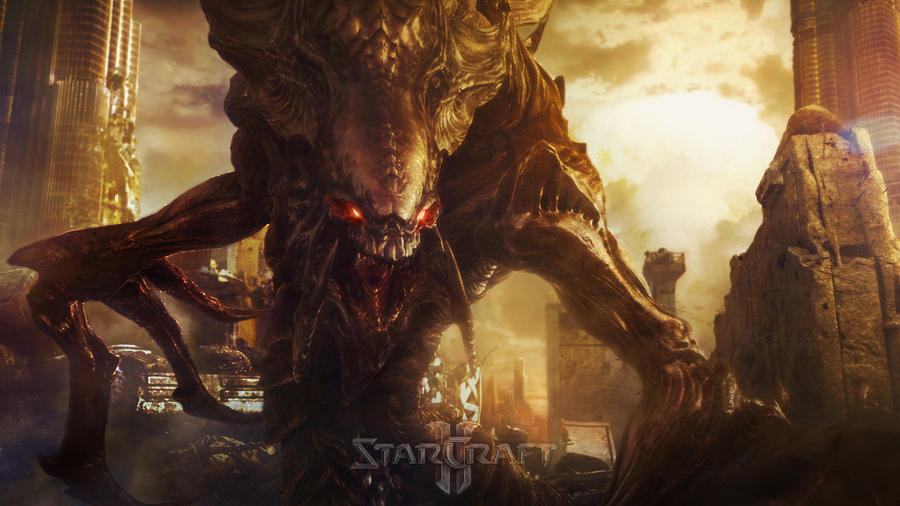
FACT: The planet Earth was a DNA treasure trove for the Overmind. It was able to exactly replicate its' units back in Char, including elite units like the Brutalisk, the Omegalisk, and the Leviathan, and unique heroes like Infested Alexei Stukov, Zagara the Brood Mother, and Queen of Blades herself. The Earth's DNA pool was so diverse, Overmind and its' evolution master Abathur were able to create new Zerg units using Earth's creatures as motives.
FACT: The planet Earth was overridden by Zerg in a matter of weeks. Unsuspecting organizations and governments could not do anything against the sheer number of the Swarm. Scared survivors, humans and Characters alike, are forced to hide underground, waiting out the Zergs' hyperactivity during the day and scavenging for supplies with constant threat of the Zerg units waking up and unburrowing during the night.
FACT: All but one place in the Earth has fallen to the Zerg, being...
"Gensokyo." Yukari closed her diary and looked out to the bleak skies from her bedroom window. Beyond an imaginary line lies a literal hell for anyone that is not affiliated with the Zerg. Considering the sheer number of them, Yukari was surprised that the Zerg did not begin their invasion in Gensokyo already... perhaps they don't know about Gensokyo... even though the chance is slim. Perhaps the location proves as an advantage, as there is literally only one way in and one way out of Gensokyo: through the pathway from Hakurei Shrine to the outside world. Or perhaps the Zerg recognizes the fighting power of the Gensokyo's denizens, and are hesitant to attack them out of whim or on hellbent conquest. They, too, would need strategy.
"Come, beasts." Yukari muttered to herself as she left the bedroom, leaving the closed diary on her desk. "No matter what happens, Gensokyo will not fall."
Summary and Rules:
This is a spin-off to the ever-so-popular roleplay All the World's a Game, where an old and retired character Overmind has resurged as the dominant force of control on Earth.
Some things to address are:
1) Most rules on AtWaG in terms of playing the RP still stands.
That means....
- No godmodes, metagames, extremely lewd contents (some lewds are fine) and the like
- Keep your post length to a decent level
- Don't tip the balance of the Henderson Scale too much
2) You may use up to 3 characters from All the World's a Game
- If you wish to use less, that is fine. However, if you wish to use more, you better have a damn good reason why.
- To keep the recruitment simple, if you already have your character in AtWaG, just link the OOC post in which you have your character's application. Nothing's stopping you, however, from writing an edited version of the application with different abilities or stuff like that in conjunction to fighting the Zerg.
- If you do NOT have any character in AtWaG and you wish to join the RP, you can use the AtWaG application template and make your app here. If it gets accepted here, ten-to-one it will be accepted in AtWaG as well.
- To twist what has been said above, this RP can be used as a test gauge for your application if you wished to join AtWaG but was afraid that your application will be denied or, even if it has been accepted, you won't be able to RP well. CONSIDER THIS RP A PRACTICE RUN FOR YOURSELF IF YOU ARE NEW.
3) Character relationships and correlation to AtWaG
- All character relationships are updated to the latest post from AtWaG. That means, John and Yukari are still married, Takoizu is a thing, (with probably a different biography) Rena and Nera are still lovey-dovey, and all that.
- Neo-Yakuza, PALADIN, WRAITH, Prometheus Lab and other organizations have all been defeated and vanished from the map by the Zerg. Whatever happened to the Characters tied to those organizations are determined by the owners of those Characters in AtWaG
- Absolutely none of the events that happened in this RP will be mentioned in AtWaG.
4) If you reserve a post, be courteous enough to list the locations of where you wiill be posting so that people with characters away from the location can podt freely without penalization.
I feel like this should be a common practice for every RP.
Information about the Zerg:
Existing Zerg Ground Units
Existing Zerg Air Units
Existing Zerg Defensive Structures
Special and Elite Units
Hero Units
Last edited by [OOC]All the World's a Zerg Rush - An AtWaG spin-off RP

07/03/2015, 08:37 AM #2
Information about Existing Zerg Ground Units
Larvae are the closest creatures to the original zerg insectoids. Their genetic versatility and their psychic sensitivity makes them the backbone of all Zerg units and, therefore, all Zerg life. Within a larva's DNA are countless sequences, carrying billions of patterns and nearly infinite possible genetic combinations, and they contain within them the genetic code for all other zerg breeds. When a new breed of zerg is needed, an individual larva will enter a pupal state with a command from the Overmind, cerebrate, or overlord, and begin replicating the DNA of one specific zerg breed at an astounding rate. After a short gestation period, the new mature zerg minion hatches.
Maggot-like, larvae often make a sucking sound from their tail section, akin to someone's boot stuck in mud. Physically, they have a segmented, multilegged body, trailing a mucous-like substance behind them and a complex array of internal organs. Every segment of the larva's body contains all the required organs to ensure its survival. Such a trait, combined with near instant wound clotting, allows larvae to function and morph normally even if cut in half. Its small twin antennae probe the air around it.

Drones are considered the "workers" of Zerg, able to gather resources that the Zerg needs such as Minerals and Vespene Gas with their claws. They are also engineered with the larvae's ability to break down their own genetic coding and transform themselves into rudimentary Zerg structures. A transforming drone needs creep, a purple living Zerg organism with thick and slimy texture that sustains and nourishes Zerg units and structures, to provide nourishment and mass to support its new form.
Drones move by hovering above the ground using a float bladder. This peculiar organ emits a low-frequency energy field that disrupts gravity around the drone. The creature then "swims" through the air by undulating its body and using some of the excess energy as a means of propulsion. Its' fleshy, webbed membranes keep Drones steady while in motion.

Light assault warriors mainly used for sabotage, scouting, and hit-and-run tactics, Zerglings are the core of any Zerg incursion. Zerglings are the smallest zerg strain apart from the larvae, and equivalent in size to a large dog, zerglings are one meter tall and possess webbed feet. Further mutations may be made to zergling DNA, namely the alteration of their physiology through a metabolic boost to increase their reflexes and rate of movement and the mutation of their adrenal glands, changing their glandular balance to induce a battle frenzy.
Zerglings have tough, adaptable, leathery skin which prevents moisture loss, while still allowing fluid circulation to keep the zergling's body temperature at appropriate levels. As per their origins, zerglings have an efficient nutrient storage system. Zerglings can derive the necessary compounds for life (even water) from anything they eat. This allows zerglings to operate away from a hive cluster for extended periods of time.
Zerglings are physically adaptable creatures, able to climb near vertical surfaces and are extraordinarily fast, though they are generally easy to exterminate, one ending up as roadkill after being run over by a recon vehicle. Zerglings have a complex optical structure, and their eyes have an optical aperture which allows them to see in the dark.
The zergling's spiked tail allows the creature to maintain balance while running at high speeds. The spikes that extend from the tip have no discernable purpose.
When Zerglings attack, they move in packs from couple dozen to even hundreds. While they themselves are weak, a large group of Zerglings can operate efficiently under commands of a larger zerg warrior. In combat, zerglings are fond of ripping enemies to shreds with their sickles and fangs, indicating a sadistic streak. These fangs and claws are known to rip through steel plates like paper and, when in a frenzy, can even cut through reinforced steel.
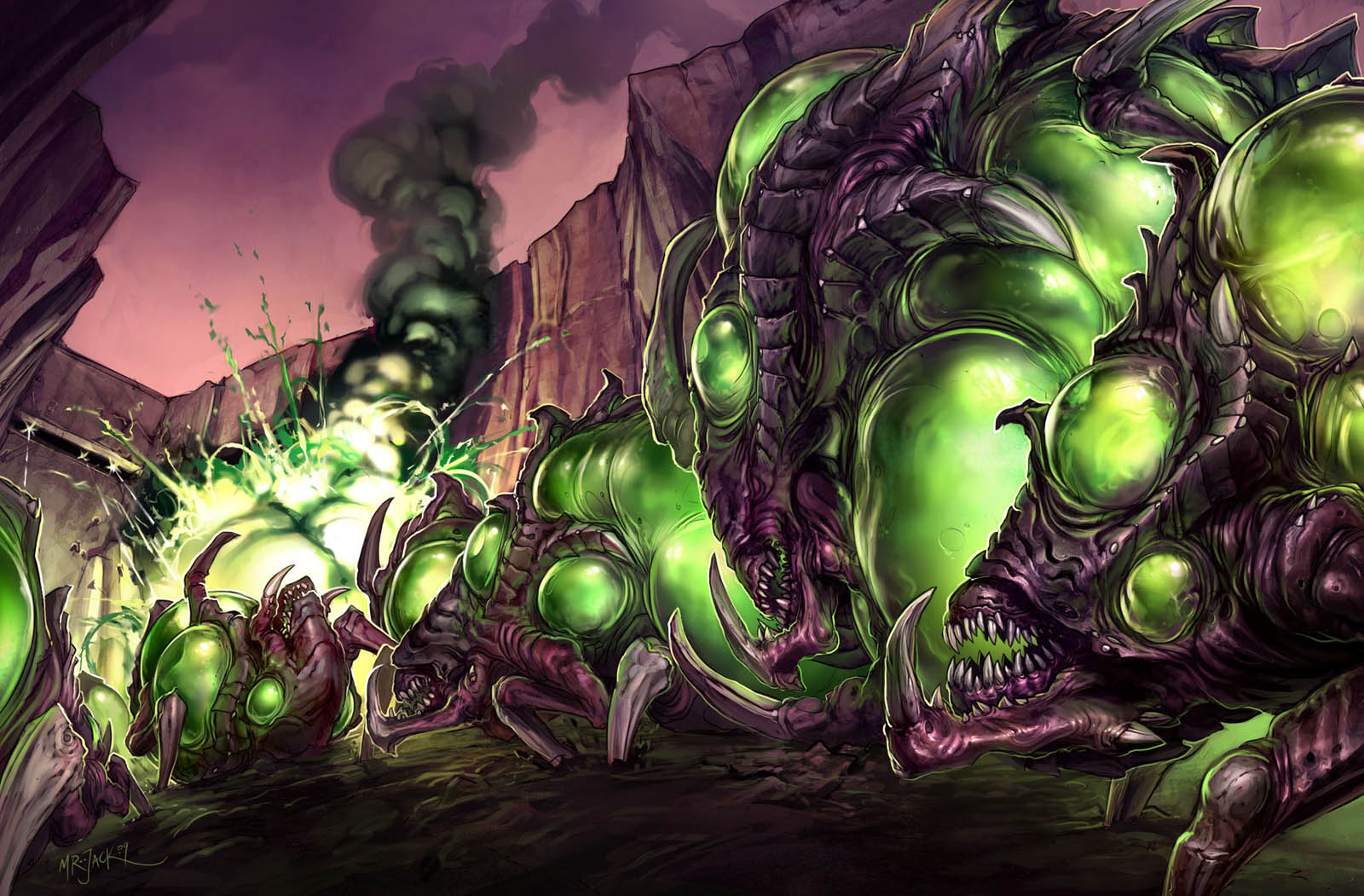
Banelings are created from zerglings following a brief chrysalis phase. In the new form, the zergling's claws shrivel and become withered, and a swollen sac filled with volatile chemicals grows out of its back. The zergling's skin is repurposed, stretching over newly formed growths while its bone plates soften to hold bulbous, pulsating acid sacs in place. Though the remains of the carapace offer no real protection, they allow for unhindered delivery of the baneling's payload. The digestive and reproductory tracts are assimilated as nutrients to accelerate the process, and make room for the fleshy, mutated adrenal glands. These are re-purposed to produce and store large quantities of highly corrosive acid.
Because of its mass, the baneling's legs are thicker than the zergling's, in order to stabilize itself. Its feet are replaced by sharp spikes that allow them to navigate rough terrain, albeit at a slower pace. The Swarm was able to increase the baneling's speed despite these imperfections. Yet due to their bloated nature, banelings are barely able to walk. They have been observed to tuck into a ball and roll. Banelings also contain rudimentary sonar system, consisting of a transmitter in the center of the baneling's skull, along with two evenly spaced receivers to the sides. The transmitter emits pulses that map the baneling's surrounding area, and echoes back to the receiver, feeding the baneling with a continuous stream of spatial information.
When a baneling gets close enough to an enemy, it triggers a reaction within its volatile chemical payload, causing the creature to explode with a shower of searing acid. The explosion destroys the baneling but also inflicts terrible damage to its enemies, highly effective against both structures and ground forces. In fact, a clutch of them is capable of wiping out a group of vehicles and infantry in the blink of an eye. The banelings' lethality is further enhanced by the zerg predilection for burrowing. An apparently safe area can soon turn into a deathtrap as these monstrosities erupt beneath their foes, giving enemies virtually no time to react.
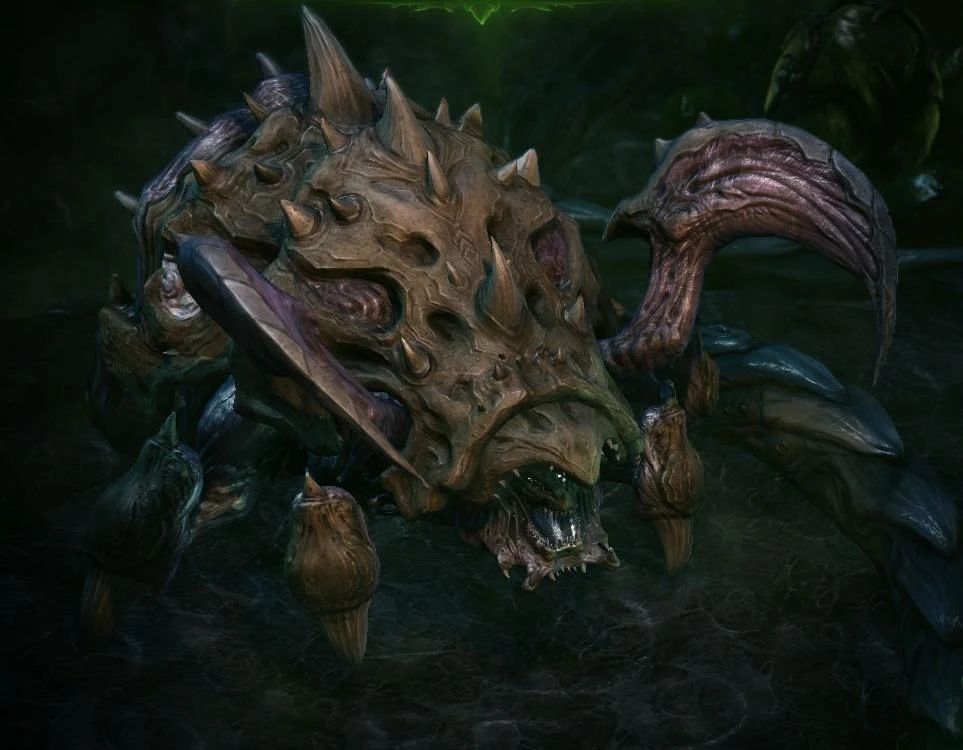
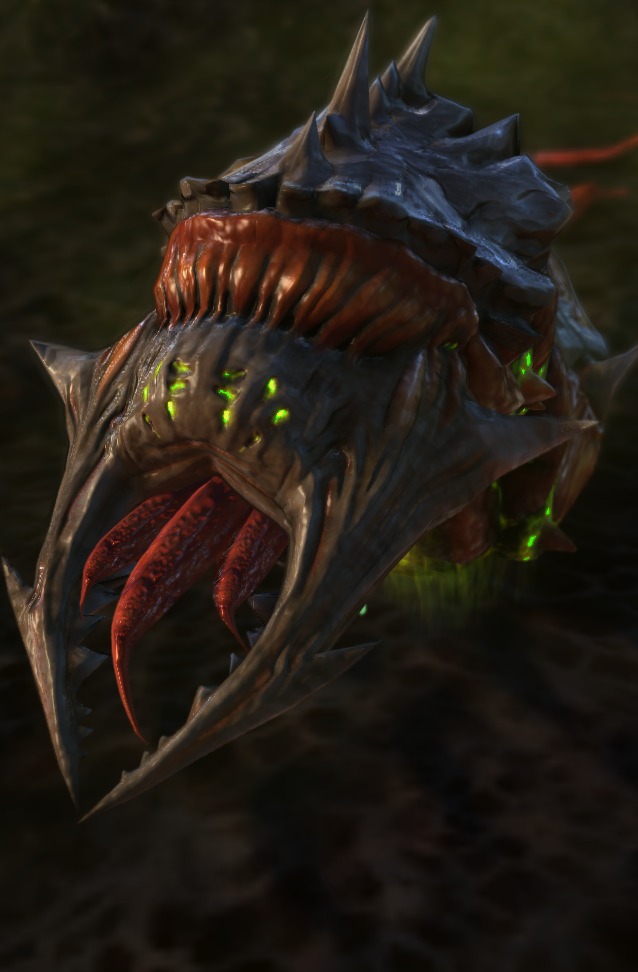
The roach is a particularly tough, armored breed which possesses a high-speed regeneration ability when burrowed, able to heal from even lethal wounds in matter of minutes when underground. Their ranged acid saliva attack is capable of penetrating neosteel and armor, and violently dissolving flesh on multiple entry points. If pressed into close quarters, however, roaches use scythe-like blades on their backs to dispatch the enemy. The hardness of these scythes allows roaches to scythe through neosteel and armor with ease.
Perhaps its' most terrifying ability is its' Tunneling Claws. Roaches can move slowly while underground with upgrade, allowing for a more efficient ambush, and increases its underground regeneration even more.
The hydralisk is the zerg basic front-line creature, forming the backbone of their onslaughts with its resistant carapace and ranged spine attack. An average Hydralisk is 5.4m long and weighs 390 kg. Since hydralisks move relatively slowly over open terrain, it is common for hydralisks to burrow and await their prey to enter killing range before attacking, destroying their enemies in a deadly crossfire.
Despite their relatively sluggish nature, hydralisks can climb vertical surfaces and continued evolution of the strain through muscular augmentation has resulted in faster hydralisks.
The hydralisk's endocrine and adrenal were altered as part of their evolution. The chemicals pumped into their bloodstream effectively force them to live in a perpetual "fight response." Some hydralisk variants seem to be able to overcharge their specialized endocrine system, substantially increasing aggression and savagery.
Hydralisks may attack directly with tri-bladed scythes: high-density bone blades that are connected to a set of fast-twitching, striated muscles, which allow for great striking power with a modest range of motion, deadly even in restricted mobility scenarios such as tight corridors or trenches. More commonly though, hydralisks strike from a distance with volleys of armor-piercing spines 30cm in length. Hundreds of these spines are stored in the upper carapace plates and covered by flaps. The flaps fold back before the spines fire, a process which gives a few seconds warning to an impending volley.
The hydralisk has 4,000 muscles, compared to a terran's 629, and a portion of these may be used to launch the spines with enough force to penetrate 2 cm. of neosteel at a range of over 300 meters or even half a kilometer at a velocity greater than that of a sniper bullet.
The hydralisk may also use its jaw as a weapon. With an estimated bite force of 5000 pounds per square inch, the hydralisk's jaw can easily cut through flesh, bone, and even neosteel.
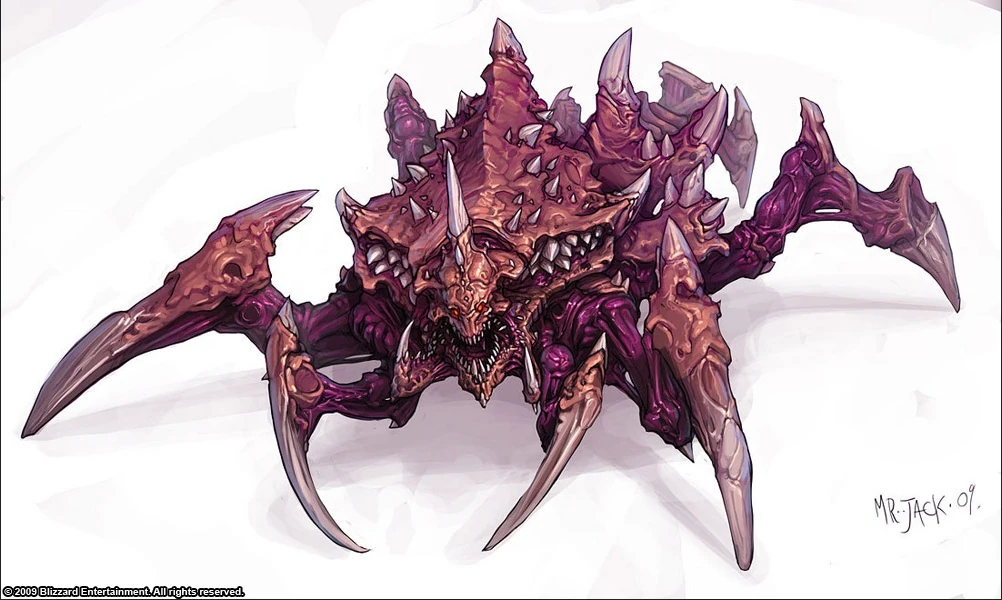
Evolved from the hydralisk, lurkers are powerful anti-ground ambushers. They serve as defense warriors for hive clusters and outlying zerg colonies. Lurkers emit waves of super-dense spines against their enemies, having a full width of damage of ten meters. However, lurkers must actually burrow underground to release these subterranean attacks. The spines can even be directed downward into open spaces, provided the lurker is underground. As such, even a handful of lurkers can turn an inoccuous chokepoint into a nightmare. The only weakness of the lurker is that it is virtually defenseless while above ground.
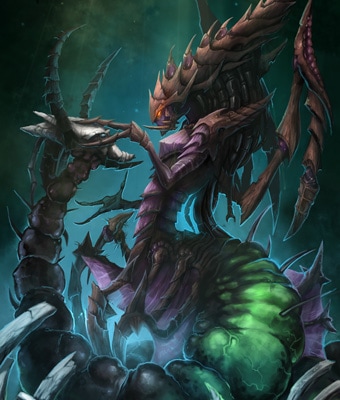
Psionic support unit of the Zerg colonies, the Queen promotes faster growth of a colony it resides in. Queens are sapient beings, and are able to talk human language. The queen's brain is encased in an armored skull, and connected to a set of nerve cords that bear resemblance to those possessed by protoss. The queen's brain gives it great mental capabilities, but these queens have severe limits to their mental flexibility and have limited independent thought and analysis.
In leadership roles, they oversee hives and easily coordinate lesser strains. Queens can evolve and grow through experience, and can analyze and relay any tactical data fed to them by overlords.
The new morphology of these queens hints at the incorporation of terran or protoss DNA, or perhaps even the zerg-altered genes of the Queen of Blades herself. Such evolution implies a widespread change occurred within the zerg hierarchy, a redistribution of power making them more difficult to combat.
Like all ground-based zerg strains, queens move faster across creep than normal ground. However, their legs are designed so that their movement is impaired when crossing non-creep covered areas. This is most likely to keep more intelligent queens within the vicinity of a hive and reduce the incentive for them to wander off on their own.
Queens are primarily used to support the zerg colony itself by three utilitarian abilities. She can create creep tumors that spread creep across surfaces and even walls, lay eggs on hatcheries, lairs, or hives to accelerate larvae production, and transfuse Zerg blood to biological units and structures to rejuvenate them.
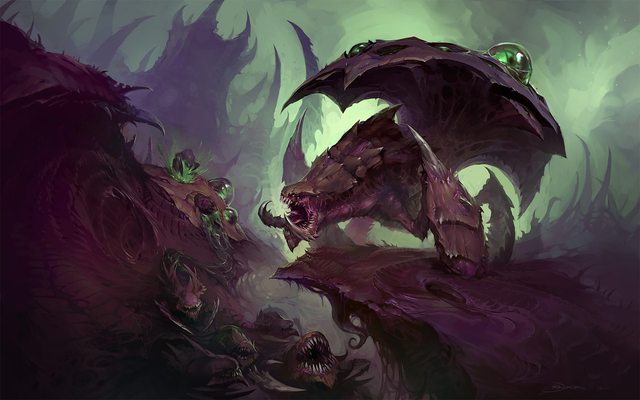
Like Lurkers, Swarm Hosts cannot attack while above ground. The swarm host instead burrows into the ground in order to provide a seemingly endless supply of locusts. The large, mushroom-shaped structure on the swarm hosts back is a breeding ground that weaponizes the millions of diminute larvae inhabiting the creatures acidic bloodstream. Through a simple system of membranes for matter exchange, glands that pump the offspring full of hormones to hyper-accelerate growth, and ducts for efficient transportation to the bubbling pockets on the surface of the incubator, the swarm host births deadly, short-lived locusts to destroy threats to the Swarm.
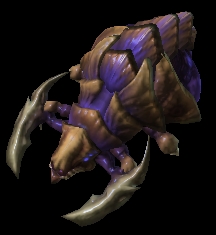
Locusts are short-lived, ferocious, parasitic symbiotes which attack any nearby enemy with volleys of acidic saliva. They are spawned from the millions of larvae that inhabit the swarm host's bloodstream. When the swarm host is threatened or engaged in combat, subtle chemical signals instruct the larvae to head for its incubator, where they are evolved into locusts.
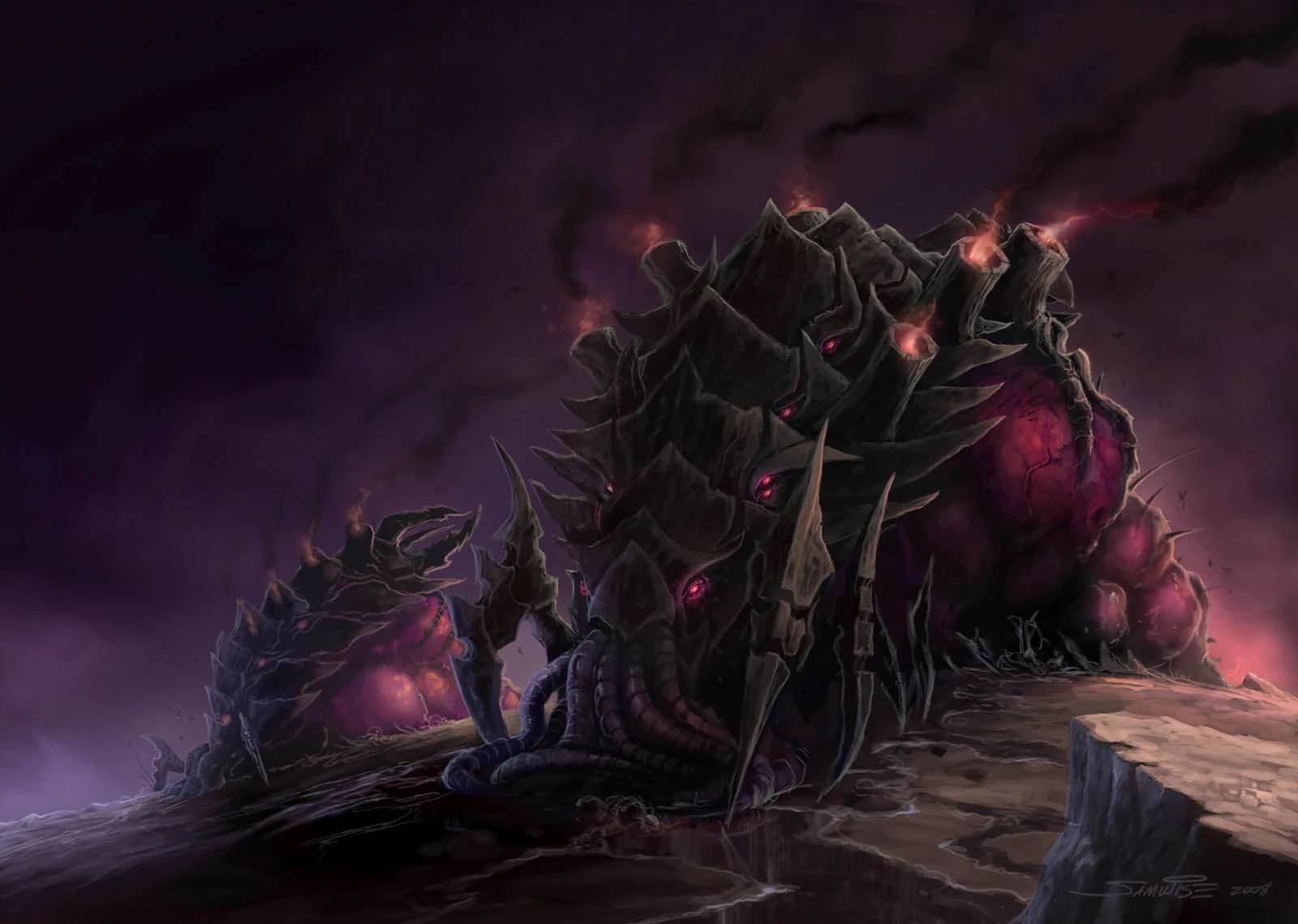
An offensive mage unit of the Zerg Swarm, Infestors are one of the more insidious new additions to the Swarm. Infestors are carried by sturdy legs that secrete a corrosive substance that softens the soil and allows them to burrow in the blink of an eye. Unlike most zerg strains, infestors have the ability to move while burrowed. Writhing sensory tentacles that extend from the infestor's jaw serve as a secondary, albeit more powerful, set of eyes and ears by means of thousands of microscopic growths that function as biological trancievers.
Hardened plates of assimilated mold and fungus offer infestors protection from enemy fire and would-be predators. This armor also functions as a weapon, as the infestor can turn the inner layer of its carapace into a viscous fluid that breaks down matter in seconds and immobilizes anything it comes in contact with. This can be spewed over enemy targets with dire effects.
Infestors are known to ingest infested marines to use as terror weapons on the battlefield, carrying them to a combat zone. The marines are stored in thick flesh cavities until the infestor regurgitates them to face their former compatriots, or anything else that might pose a threat to the Swarm.
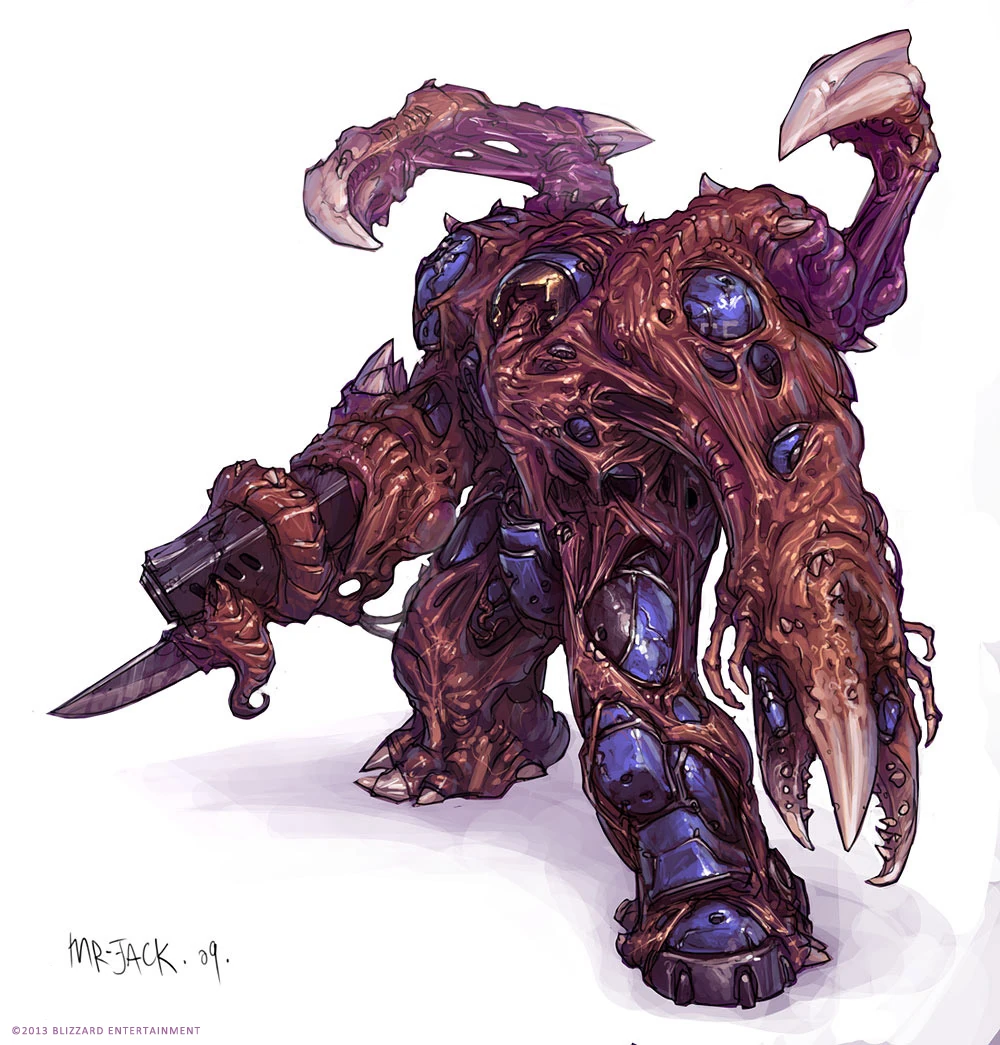
Infested Terran are a mixed breed of humans infected with hyper-evolutionary zerg virus, turning into a mindless monster obedient to the zerg. They are still able to fire their C-14 Gauss Rifle, but have been slowed to the point they move at the same pace as a sloth. They are temporarily deployed by the Infestor, and die after a few minutes of deployment.
Perhaps the infestors most dangerous feature is the neural parasite, a symbiotic creature living within infestors that, when spat, attaches to an enemy and controls its mind for a short period of time. This is inserted through a parasitic stinger, a flexible appendage that is capable of boring through both natural and organic plating. The parasite then is then inserted directly into the target's central nervous system. The amorphous, multi-mouthed parasite cannot survive for long within a foreign body, but whatever horrific deeds the host carries out while under the influence of the Swarm will leave everlasting scars.
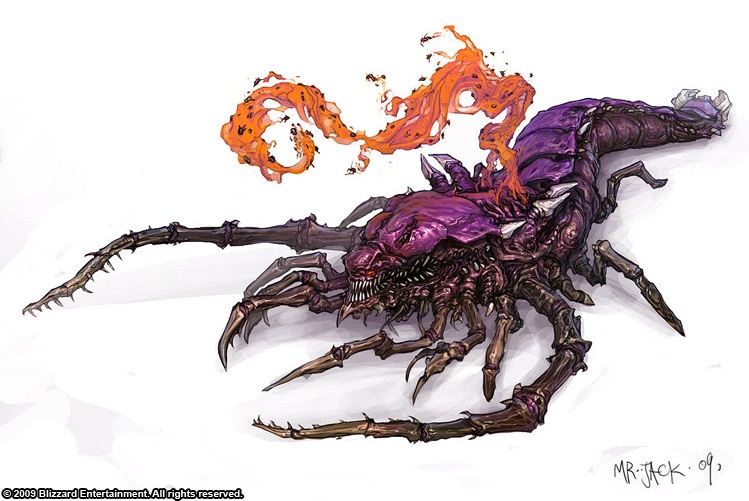
While the Infestor is an offensive mage unit of the Swarm, Defiler's abilities are geared more towards the defense. Defiler was created from festering, carcinogenic pathogens that were, in essence, leftover genetic chains from other zerg strains. It used this genetic material to synthesize virus-like biochemicals. These biochemicals were extremely hazardous, resistant to the most effective anti-toxins, and, paradoxically, dangerous even to the zerg. Defilers were known to cannibalize other zerg to fuel the metasynaptic processes that generated the biochemicals, often accompanied by zergling escorts for this very reason.
The defiler's body was host to countless small organisms that lived on the carapace, constantly feeding on each other. The defiler could spontaneously launch a number of these creatures to swarm a location that make it difficult to target anything under the ensuing cloud. In addition, defilers could produce corrosive spores and hurl them at a target area, the spores exploding in a dense cloud. The highly toxic mist that resulted corroded anything it touched. The spores were also prone to igniting due to a flammable accelerant contained in them.
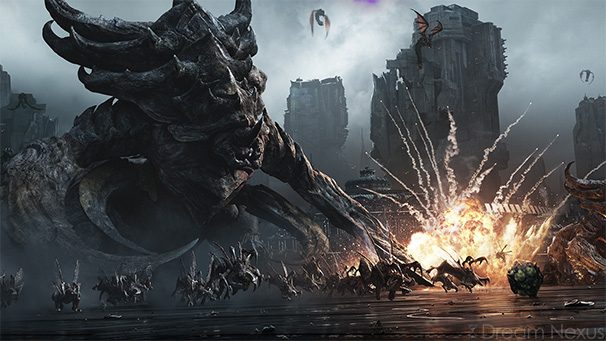
Quite literally living battering rams, Ultralisks are the most powerful ground strain the Swarm possesses and their DNA is the "final viable code" utilized by larvae. Ultralisks attack using four large, bone-like scythes which protrude from their backs. Known as "kaiser blades", these scythes are nearly indestructible. Possessing monomolecular edges, these scythes are able to tear through most substances with ease. The density, bevel, and edges of these organic weapons are honed at the genetic level.
Ultralisks also possess an exceptionally thick carapace. Preliminary tests on the carapace itself proved that the diamond-shaped, chitinous scales of the creature were combined with foreign compounds and organic tissue multiple times, resulting in very light plates with an unmatched level of hardness. A gene also exists within the ultralisk's genetic code that exists with the sole purpose of growing heavily armored copies of the beasts primary organs in random locations of its body. Ultralisks also have superior immune system, allowing it to thrive in the most toxic and inhospitable environments the galaxy has to offer.
Last edited by WriggleRid3r; 07/04/2015, 11:41 PM. Larvae
Image
Larvae are the closest creatures to the original zerg insectoids. Their genetic versatility and their psychic sensitivity makes them the backbone of all Zerg units and, therefore, all Zerg life. Within a larva's DNA are countless sequences, carrying billions of patterns and nearly infinite possible genetic combinations, and they contain within them the genetic code for all other zerg breeds. When a new breed of zerg is needed, an individual larva will enter a pupal state with a command from the Overmind, cerebrate, or overlord, and begin replicating the DNA of one specific zerg breed at an astounding rate. After a short gestation period, the new mature zerg minion hatches.
Maggot-like, larvae often make a sucking sound from their tail section, akin to someone's boot stuck in mud. Physically, they have a segmented, multilegged body, trailing a mucous-like substance behind them and a complex array of internal organs. Every segment of the larva's body contains all the required organs to ensure its survival. Such a trait, combined with near instant wound clotting, allows larvae to function and morph normally even if cut in half. Its small twin antennae probe the air around it.
Drone
Image
Drones are considered the "workers" of Zerg, able to gather resources that the Zerg needs such as Minerals and Vespene Gas with their claws. They are also engineered with the larvae's ability to break down their own genetic coding and transform themselves into rudimentary Zerg structures. A transforming drone needs creep, a purple living Zerg organism with thick and slimy texture that sustains and nourishes Zerg units and structures, to provide nourishment and mass to support its new form.
Drones move by hovering above the ground using a float bladder. This peculiar organ emits a low-frequency energy field that disrupts gravity around the drone. The creature then "swims" through the air by undulating its body and using some of the excess energy as a means of propulsion. Its' fleshy, webbed membranes keep Drones steady while in motion.
Zergling
Image
Light assault warriors mainly used for sabotage, scouting, and hit-and-run tactics, Zerglings are the core of any Zerg incursion. Zerglings are the smallest zerg strain apart from the larvae, and equivalent in size to a large dog, zerglings are one meter tall and possess webbed feet. Further mutations may be made to zergling DNA, namely the alteration of their physiology through a metabolic boost to increase their reflexes and rate of movement and the mutation of their adrenal glands, changing their glandular balance to induce a battle frenzy.
Zerglings have tough, adaptable, leathery skin which prevents moisture loss, while still allowing fluid circulation to keep the zergling's body temperature at appropriate levels. As per their origins, zerglings have an efficient nutrient storage system. Zerglings can derive the necessary compounds for life (even water) from anything they eat. This allows zerglings to operate away from a hive cluster for extended periods of time.
Zerglings are physically adaptable creatures, able to climb near vertical surfaces and are extraordinarily fast, though they are generally easy to exterminate, one ending up as roadkill after being run over by a recon vehicle. Zerglings have a complex optical structure, and their eyes have an optical aperture which allows them to see in the dark.
The zergling's spiked tail allows the creature to maintain balance while running at high speeds. The spikes that extend from the tip have no discernable purpose.
When Zerglings attack, they move in packs from couple dozen to even hundreds. While they themselves are weak, a large group of Zerglings can operate efficiently under commands of a larger zerg warrior. In combat, zerglings are fond of ripping enemies to shreds with their sickles and fangs, indicating a sadistic streak. These fangs and claws are known to rip through steel plates like paper and, when in a frenzy, can even cut through reinforced steel.
Baneling
Image
Banelings are created from zerglings following a brief chrysalis phase. In the new form, the zergling's claws shrivel and become withered, and a swollen sac filled with volatile chemicals grows out of its back. The zergling's skin is repurposed, stretching over newly formed growths while its bone plates soften to hold bulbous, pulsating acid sacs in place. Though the remains of the carapace offer no real protection, they allow for unhindered delivery of the baneling's payload. The digestive and reproductory tracts are assimilated as nutrients to accelerate the process, and make room for the fleshy, mutated adrenal glands. These are re-purposed to produce and store large quantities of highly corrosive acid.
Because of its mass, the baneling's legs are thicker than the zergling's, in order to stabilize itself. Its feet are replaced by sharp spikes that allow them to navigate rough terrain, albeit at a slower pace. The Swarm was able to increase the baneling's speed despite these imperfections. Yet due to their bloated nature, banelings are barely able to walk. They have been observed to tuck into a ball and roll. Banelings also contain rudimentary sonar system, consisting of a transmitter in the center of the baneling's skull, along with two evenly spaced receivers to the sides. The transmitter emits pulses that map the baneling's surrounding area, and echoes back to the receiver, feeding the baneling with a continuous stream of spatial information.
When a baneling gets close enough to an enemy, it triggers a reaction within its volatile chemical payload, causing the creature to explode with a shower of searing acid. The explosion destroys the baneling but also inflicts terrible damage to its enemies, highly effective against both structures and ground forces. In fact, a clutch of them is capable of wiping out a group of vehicles and infantry in the blink of an eye. The banelings' lethality is further enhanced by the zerg predilection for burrowing. An apparently safe area can soon turn into a deathtrap as these monstrosities erupt beneath their foes, giving enemies virtually no time to react.
Roach
Image
The roach is a particularly tough, armored breed which possesses a high-speed regeneration ability when burrowed, able to heal from even lethal wounds in matter of minutes when underground. Their ranged acid saliva attack is capable of penetrating neosteel and armor, and violently dissolving flesh on multiple entry points. If pressed into close quarters, however, roaches use scythe-like blades on their backs to dispatch the enemy. The hardness of these scythes allows roaches to scythe through neosteel and armor with ease.
Perhaps its' most terrifying ability is its' Tunneling Claws. Roaches can move slowly while underground with upgrade, allowing for a more efficient ambush, and increases its underground regeneration even more.
Hydralisk
Image
The hydralisk is the zerg basic front-line creature, forming the backbone of their onslaughts with its resistant carapace and ranged spine attack. An average Hydralisk is 5.4m long and weighs 390 kg. Since hydralisks move relatively slowly over open terrain, it is common for hydralisks to burrow and await their prey to enter killing range before attacking, destroying their enemies in a deadly crossfire.
Despite their relatively sluggish nature, hydralisks can climb vertical surfaces and continued evolution of the strain through muscular augmentation has resulted in faster hydralisks.
The hydralisk's endocrine and adrenal were altered as part of their evolution. The chemicals pumped into their bloodstream effectively force them to live in a perpetual "fight response." Some hydralisk variants seem to be able to overcharge their specialized endocrine system, substantially increasing aggression and savagery.
Hydralisks may attack directly with tri-bladed scythes: high-density bone blades that are connected to a set of fast-twitching, striated muscles, which allow for great striking power with a modest range of motion, deadly even in restricted mobility scenarios such as tight corridors or trenches. More commonly though, hydralisks strike from a distance with volleys of armor-piercing spines 30cm in length. Hundreds of these spines are stored in the upper carapace plates and covered by flaps. The flaps fold back before the spines fire, a process which gives a few seconds warning to an impending volley.
The hydralisk has 4,000 muscles, compared to a terran's 629, and a portion of these may be used to launch the spines with enough force to penetrate 2 cm. of neosteel at a range of over 300 meters or even half a kilometer at a velocity greater than that of a sniper bullet.
The hydralisk may also use its jaw as a weapon. With an estimated bite force of 5000 pounds per square inch, the hydralisk's jaw can easily cut through flesh, bone, and even neosteel.
Lurker
Image
Evolved from the hydralisk, lurkers are powerful anti-ground ambushers. They serve as defense warriors for hive clusters and outlying zerg colonies. Lurkers emit waves of super-dense spines against their enemies, having a full width of damage of ten meters. However, lurkers must actually burrow underground to release these subterranean attacks. The spines can even be directed downward into open spaces, provided the lurker is underground. As such, even a handful of lurkers can turn an inoccuous chokepoint into a nightmare. The only weakness of the lurker is that it is virtually defenseless while above ground.
Brood Queen AKA Queen
Image
Psionic support unit of the Zerg colonies, the Queen promotes faster growth of a colony it resides in. Queens are sapient beings, and are able to talk human language. The queen's brain is encased in an armored skull, and connected to a set of nerve cords that bear resemblance to those possessed by protoss. The queen's brain gives it great mental capabilities, but these queens have severe limits to their mental flexibility and have limited independent thought and analysis.
In leadership roles, they oversee hives and easily coordinate lesser strains. Queens can evolve and grow through experience, and can analyze and relay any tactical data fed to them by overlords.
The new morphology of these queens hints at the incorporation of terran or protoss DNA, or perhaps even the zerg-altered genes of the Queen of Blades herself. Such evolution implies a widespread change occurred within the zerg hierarchy, a redistribution of power making them more difficult to combat.
Like all ground-based zerg strains, queens move faster across creep than normal ground. However, their legs are designed so that their movement is impaired when crossing non-creep covered areas. This is most likely to keep more intelligent queens within the vicinity of a hive and reduce the incentive for them to wander off on their own.
Queens are primarily used to support the zerg colony itself by three utilitarian abilities. She can create creep tumors that spread creep across surfaces and even walls, lay eggs on hatcheries, lairs, or hives to accelerate larvae production, and transfuse Zerg blood to biological units and structures to rejuvenate them.
Swarm Host
Image
Like Lurkers, Swarm Hosts cannot attack while above ground. The swarm host instead burrows into the ground in order to provide a seemingly endless supply of locusts. The large, mushroom-shaped structure on the swarm hosts back is a breeding ground that weaponizes the millions of diminute larvae inhabiting the creatures acidic bloodstream. Through a simple system of membranes for matter exchange, glands that pump the offspring full of hormones to hyper-accelerate growth, and ducts for efficient transportation to the bubbling pockets on the surface of the incubator, the swarm host births deadly, short-lived locusts to destroy threats to the Swarm.
Locust
Image
Locusts are short-lived, ferocious, parasitic symbiotes which attack any nearby enemy with volleys of acidic saliva. They are spawned from the millions of larvae that inhabit the swarm host's bloodstream. When the swarm host is threatened or engaged in combat, subtle chemical signals instruct the larvae to head for its incubator, where they are evolved into locusts.
Infestor
Image
An offensive mage unit of the Zerg Swarm, Infestors are one of the more insidious new additions to the Swarm. Infestors are carried by sturdy legs that secrete a corrosive substance that softens the soil and allows them to burrow in the blink of an eye. Unlike most zerg strains, infestors have the ability to move while burrowed. Writhing sensory tentacles that extend from the infestor's jaw serve as a secondary, albeit more powerful, set of eyes and ears by means of thousands of microscopic growths that function as biological trancievers.
Hardened plates of assimilated mold and fungus offer infestors protection from enemy fire and would-be predators. This armor also functions as a weapon, as the infestor can turn the inner layer of its carapace into a viscous fluid that breaks down matter in seconds and immobilizes anything it comes in contact with. This can be spewed over enemy targets with dire effects.
Infestors are known to ingest infested marines to use as terror weapons on the battlefield, carrying them to a combat zone. The marines are stored in thick flesh cavities until the infestor regurgitates them to face their former compatriots, or anything else that might pose a threat to the Swarm.
Infested Terran
Image
Infested Terran are a mixed breed of humans infected with hyper-evolutionary zerg virus, turning into a mindless monster obedient to the zerg. They are still able to fire their C-14 Gauss Rifle, but have been slowed to the point they move at the same pace as a sloth. They are temporarily deployed by the Infestor, and die after a few minutes of deployment.
Perhaps the infestors most dangerous feature is the neural parasite, a symbiotic creature living within infestors that, when spat, attaches to an enemy and controls its mind for a short period of time. This is inserted through a parasitic stinger, a flexible appendage that is capable of boring through both natural and organic plating. The parasite then is then inserted directly into the target's central nervous system. The amorphous, multi-mouthed parasite cannot survive for long within a foreign body, but whatever horrific deeds the host carries out while under the influence of the Swarm will leave everlasting scars.
Defiler
Image
While the Infestor is an offensive mage unit of the Swarm, Defiler's abilities are geared more towards the defense. Defiler was created from festering, carcinogenic pathogens that were, in essence, leftover genetic chains from other zerg strains. It used this genetic material to synthesize virus-like biochemicals. These biochemicals were extremely hazardous, resistant to the most effective anti-toxins, and, paradoxically, dangerous even to the zerg. Defilers were known to cannibalize other zerg to fuel the metasynaptic processes that generated the biochemicals, often accompanied by zergling escorts for this very reason.
The defiler's body was host to countless small organisms that lived on the carapace, constantly feeding on each other. The defiler could spontaneously launch a number of these creatures to swarm a location that make it difficult to target anything under the ensuing cloud. In addition, defilers could produce corrosive spores and hurl them at a target area, the spores exploding in a dense cloud. The highly toxic mist that resulted corroded anything it touched. The spores were also prone to igniting due to a flammable accelerant contained in them.
Ultralisk
Image
Quite literally living battering rams, Ultralisks are the most powerful ground strain the Swarm possesses and their DNA is the "final viable code" utilized by larvae. Ultralisks attack using four large, bone-like scythes which protrude from their backs. Known as "kaiser blades", these scythes are nearly indestructible. Possessing monomolecular edges, these scythes are able to tear through most substances with ease. The density, bevel, and edges of these organic weapons are honed at the genetic level.
Ultralisks also possess an exceptionally thick carapace. Preliminary tests on the carapace itself proved that the diamond-shaped, chitinous scales of the creature were combined with foreign compounds and organic tissue multiple times, resulting in very light plates with an unmatched level of hardness. A gene also exists within the ultralisk's genetic code that exists with the sole purpose of growing heavily armored copies of the beasts primary organs in random locations of its body. Ultralisks also have superior immune system, allowing it to thrive in the most toxic and inhospitable environments the galaxy has to offer.
07/03/2015, 04:01 PM #3
Before making an app, what would you suggest in a character to fight this legion? Long range, close range, hand to hand combat, etc?
Have you ever crossed the line between sanity and madness? You would be amazed by what lies beyond the fog..

Spoiler
07/03/2015, 05:05 PM #4
@Kristia
It REALLY depends on which zerg unit you are fighting, since each unit has different roles in the Swarm.
Against a massive ball of zerglings, someone with AoE attacks can clean the field well. Terrans in-game are known to use incendiary weapons to counter the ever-growing horde of zerglings in a firefight.
But that same AoE attacks will prove not effective when facing high armor targets like the Roach or the Ultralisk. Those units need a more precise attacks with heavy armor-piercing or impact damage.
It REALLY depends on which zerg unit you are fighting, since each unit has different roles in the Swarm.
Against a massive ball of zerglings, someone with AoE attacks can clean the field well. Terrans in-game are known to use incendiary weapons to counter the ever-growing horde of zerglings in a firefight.
But that same AoE attacks will prove not effective when facing high armor targets like the Roach or the Ultralisk. Those units need a more precise attacks with heavy armor-piercing or impact damage.
07/03/2015, 11:05 PM #5
Information about Existing Zerg Air Units
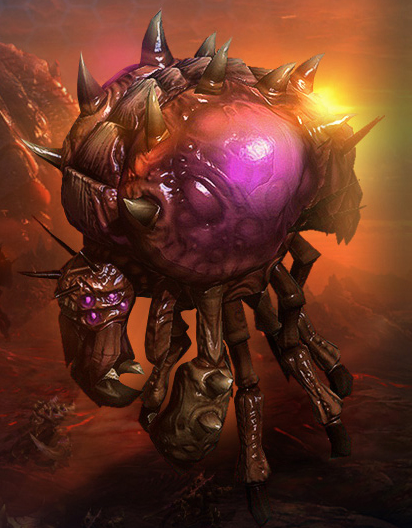
Overlords were evolved from the Gargantis proximae, a species of giant space-faring and semi-intelligent creatures which volunteered to be assimilated in order to avoid extinction. Once assimilated, they were used to help cerebrates control and coordinate their broods and scout using their enhanced senses.
Overlords possess a large, bulbous brain which is protected by a heavily armored weave of bone and cartilage. It is a large organ, with millions of nerves and synaptic contacts. The overlord's cerebral structure is complex with neural pathways woven throughout the body; but is heavily concentrated in its lower section and legs. It is through this system that overlords relay commands to the Swarm.
Unlike most other zerg breeds, overlords have a greater capacity to act on their own judgement, though their mental flexibility is still severely limited. Overlords typically only relay orders. They are technically capable of directly controlling lesser zerg, but only with extreme difficulty. Overlords are fairly docile. Additional duties include tending to young larvae and monitoring the progress of drones through a type of instinctive telepathy.
Overlords with the correct growth stimuli can carry other zerg within hollows in their hides. In this form they become deep-space transports; the importance of their function is underlined by the sheer number of overlords found accompanying zerg forces. As spacefaring creatures, an overlord's carapace pressurizes and seals whenever the creature flies through vacuum. Overlords use helium-filled gas sacs and a weak telekinetic psi-ability for lift and motive power. This helium is generated through an efficient respiratory system distributed throughout the overlord's carapace. The excess helium is stored in thick sacs that contract and expand through rudimentary pulses, allowing overlords to regulate altitude and propulsion at will. They move quite slowly however.
Overlords could disgorge creep to prepare the way for zerg conquests. This creep is produced by the overlord liquifying its internal organs, with the creep being stored in multiple glands near the overlord's head. The process is instantaneous and takes place when space is needed for transportation of zerg ground strains. Overlords can regrow their organs at will, and can modify them to derive substance from inhospitable environments. Overlords can also metamorphose into Overseer.
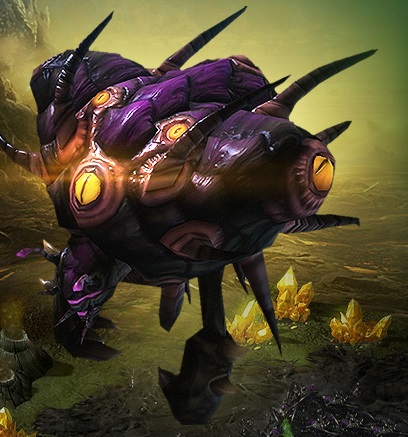
Overseers are genetically-altered overlords that have a mass of additional sockets filled with highly evolved optical receptors with hypersensitive retinas. Unlike most other zerg breeds but like overlords, overseers have the ability to act with appropriate judgment, but are severely limited in their mental flexibility.
When the overlord is subjected to the overseer strain mutation, its eyes melt into a luminescent substance that floats inside a semi-transparent skull. Sensory tentacles and twin photoreceptors, capable of sight in any environment, sprout from said substance, in between the openings of their thick, armored "faceplate". To further enhance the creatures capabilities, the main body expands and grows six new hypersensitive optical receptors in strategic positions. This latest evolution allows the overseer to detect any hidden enemy units, including those that are burrowed underground or cloaked.
By incorporating terran DNA into the overseers genetic makeup (particularly during its later stages of pupation), the creature displays a peculiar evolution pattern. Its creep glands expand and turn into stores of sentient, unfertilized bio-matter, and its organs no longer liquefy into creep, but instead a nourishing paste. At the overseers will, this paste bonds with the bio-matter in the sacs and quickly becomes an insidious infiltrator known as the changeling. Additionally, the bio-matter grows and solidifies at exponential rates when exposed to foreign atmospheres. The Swarm has capitalized on this trait, using its overseers to disable critical facilities in the midst of an invasion.
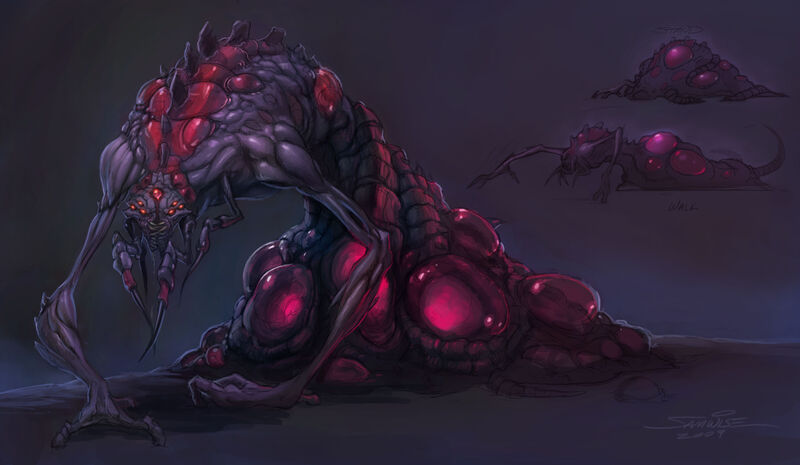
The changeling, composed of a protoplasmic substance, is capable of shape-shifting into a form resembling a terran. It can shift between specific appearances. It can even send out psionic impressions leading terrans to believe that everything is "all right".
It is intelligent, capable of operating computers. It possesses more strength than an unarmored human and can transform part of its body into a deadly bone blade, although its primary purpose does not appear to be combat.
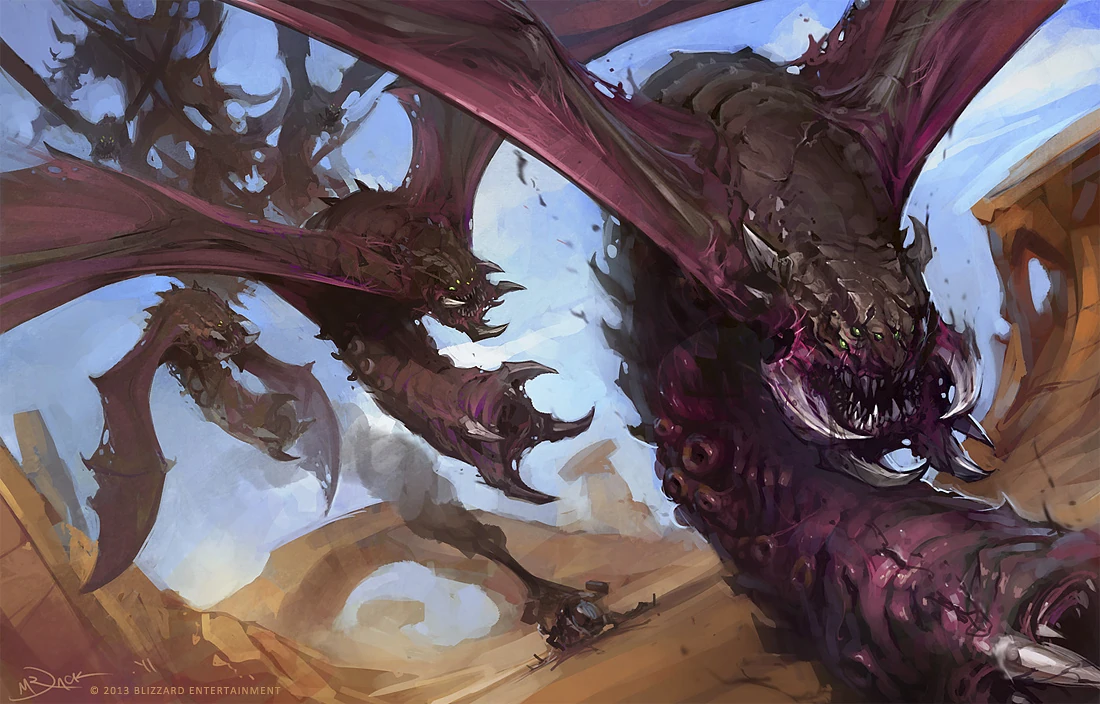
The mutalisk is an airborne zerg breed.
Mutalisks communicate in part through scent, by means of different musks derived from its biological processes. The gaseous by-product of these processes is stored in special sacs located throughout the creatures body, where it can be reserved for spaceflight propulsion. To survive in deep space, the mutalisk became self-sufficient. Every cell in its body is host to myriad bacteria that either produce chemicals or assimilate them in order to generate compounds for sustenance. New mutalisk strains present certain genetic alterations to their cellular flora, resulting in more efficient bio-processesto the point of tissue regenerating capabilities.
Mutalisks are carried aloft by leathery wings. These appendages afford the mutalisk an astonishing degree of speed and maneuverability during atmospheric flight. Wing motion also generates energy that serves as a catalyst for the creatures internal biological functions.
n battle, mutalisks form the primary flying forces of the zerg, making hit-and-run attacks against vulnerable installations and wheeling across the skies in prodigious numbers above zerg nests or land-based forces. Many attempted engagements with the zerg have collapsed due to the rapid arrival of large numbers of mutalisks before any meaningful air defense could be mustered. Under these circumstances the total loss of the forces involved is virtually guaranteed. Conversely, powerful air defenses have succeeded in keeping mutalisks at a distance, for the creatures are limited in vitality. However, they remain agile and dangerous opponents. In large numbers or against weak defenses, mutalisks will always be a deadly threat.
The mutalisk spawns small, voracious creatures called "glaive wurms", or "glave wurms", and projects these creatures to attack. Glaive wurms fly between multiple targets as they degrade explosively. The mutalisk's reproductive systemits ovipositorhas been adapted into a weapon delivery system.
When needed, Mutalisks can metamorph into two new aerial units: Guardian and Devourer.

Scourges are blind, suicidal fliers of unknown origin, seeking out enemy starships and diving into them. Catalytic agents within the scourge allow it to undergo a form of plasma metamorphosis, causing it to explode like a living bomb. A single scourge is capable of destroying a terran starfighter or shuttle and a handful can breach the hull of a starship. They are able to engage these targets in both air and the vacuum of space.
The primary drawback of the scourge is its limited ability to store energy, able to fly for barely a few hours without requiring additional substance. To conserve energy, they often perch on the backs of overlords. However, this presents a hazard, as the scourge's explosive nature can damage friendly zerg at this proximity.
Scourges possess a simple genetic makeup, allowing them to spawn in pairs from a single larva similar to that of zerglings.

Because of the difference of role between the Pre-Great War Queen and Post-Great War Queen, the Overmind has redubbed the Pre-Great War Queen as Matriarch or Flying Queen.
The Flying Queen possessed numerous tentacles, a sinuous head, and a stretched skin membrane. As with the overlords, queens were subordinated to the cerebrates to help administrate the Swarm.
On the battlefield, one of the flying queen's primary functions is to implant parasites in its enemies. Able to be launched from a distance, a tiny, remora-like parasite attached itself to the target, 'bonding' with it should the target be organic. The parasite allows higher zerg strains to see whatever the target sees. The parasite used to only be cured by killing the host, but years of dormant phase made flying queen's parasite weaker; it dies off after a few hours of living on the host, but has gained a new ability to allow the Zerg to talk to the host.
The Flying Queen can also emit thick mucus on an area, slowing down anything that is hit by the mucus. The mucus chemically deteriorates by itself after a short time. Compared to the Infestor's Fungal Growth ability, Fungal Growth makes the target immobile but the duration lasts shorter. Flying Queen's ensnare however stays on the target twice as longer as Fungal Growth does.
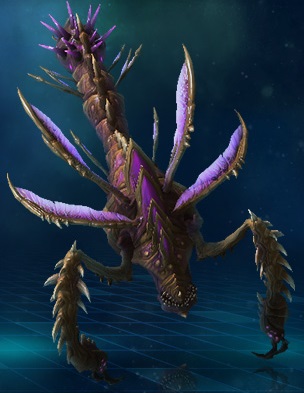
A specialized support strain, the Viper is an aerial adaptation of Defilers.
The viper's tail is largely unchanged from the original defiler template. However, it has been evolved to allow the viper to maintain its balance and direction while flying, as well as steering. What truly stands out, however, are the ingrown, crystalline spikes on the tips surface. These "crystals" emit a powerful pulse that the Viper uses to locate its targets with pinpoint accuracy. Its limbs, while formiddable in appearance, are crippled in terms of offensive capability, as the Swarm relegated them to the role of simplistic vice-grips. When on the prowl, the spikes exude a pheromone that makes the viper seem innocuous and non-threatening to its hapless victims.
The viper combines several vicious biological weapons to weaken enemy forces and give an edge to the Swarm. Vipers store a thick microbial soup within their abdomens, and can spray the viscous mixture into the air whenever ranged foes approach, essentially nullifying the effectiveness of their armaments until they can move out of the cloying mist. Additionally, all vipers possess a prehensile proboscisan elongated organ that serves as the viper's digestive system, and one that runs the entire length of the creature's body. Just as a frog uses its tongue to catch prey, the viper regurgitates its flexible intestines with great force in order to grab and pull a target towards its location.
When fatigued, the viper can siphon bioelectrical energy and nutrients from friendly zerg buildings, allowing it to quickly return to the fray. This is achieved by separating the ionic chains present in the hardened tissues of Zerg nest structures to produce a nourishing fluid. Said fluid acts as a catalyst for the plethora of microorganisms present in its bloodstream, which generate bioelectrical energy to replenish the vipers stores.
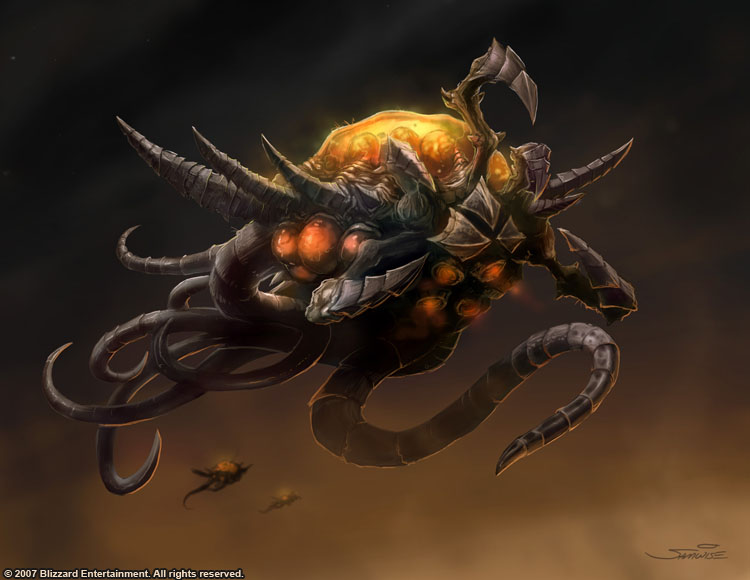
The corruptor was a squid-like zerg flying unit, with snapping beaks and dangling tentacles. The corruptor carries thick ink sacs that produces and stores parasite spores, an ink-like substance that disrupted matter at a molecular level. Any vehicles or personnel doused with this compound became very vulnerable, as the atomic chains that kept them together became brittle.
The corruptor's tentacles consisted of elongated muscle fibers laden with cancerous growths. As said growths increased in size, consuming the surrounding tissues in the process, they generated a powerful electromagnetic field that warped gravity around the creature, granting it flight. The corruptor's ability to fly was also aided by a statocysta pear-shaped gland that contained a solid, mineralized mass that floated in a low-density liquid. Its walls were coated in an impermeable substance of variable viscosity, and lined with small filaments. When the mineral core inside the gland shifted due to movement or orientation changes, the liquid and the filaments provided instant feedback to the corruptor, allowing it to maintain its balance and navigate both in atmospheric conditions and deep space.
The Corruptor can also metamorph into Brood Lord, losing its' air-to-air attack but gaining range and a new way to attack ground units.
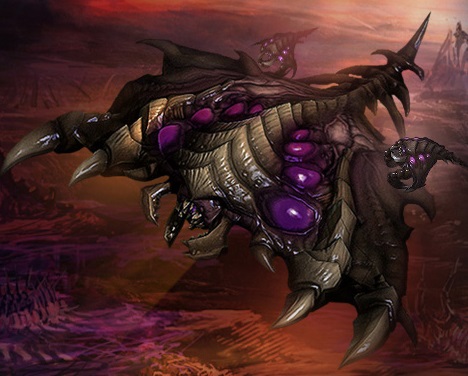
Brood lords are massive manta-like flying creatures that serve the Swarm's aerial siege units and used only in the largest conflicts.
The brood lord releases biological symbiotes on ground targets. These small creatures regulate some of the brood lords biological functions, and can also serve as living ammunition. The brood lord has clusters of broodlings squirming under its carapace at any given time. In combat, the brood lord supercharges the broodlings aggression and metabolism, turning them into short-livedbut very effectiveair-to-ground weapons that tear through personal armor and vehicular plating with ease. However, brood lords themselves are not very durable, and are vulnerable against aerial-strike combatants.
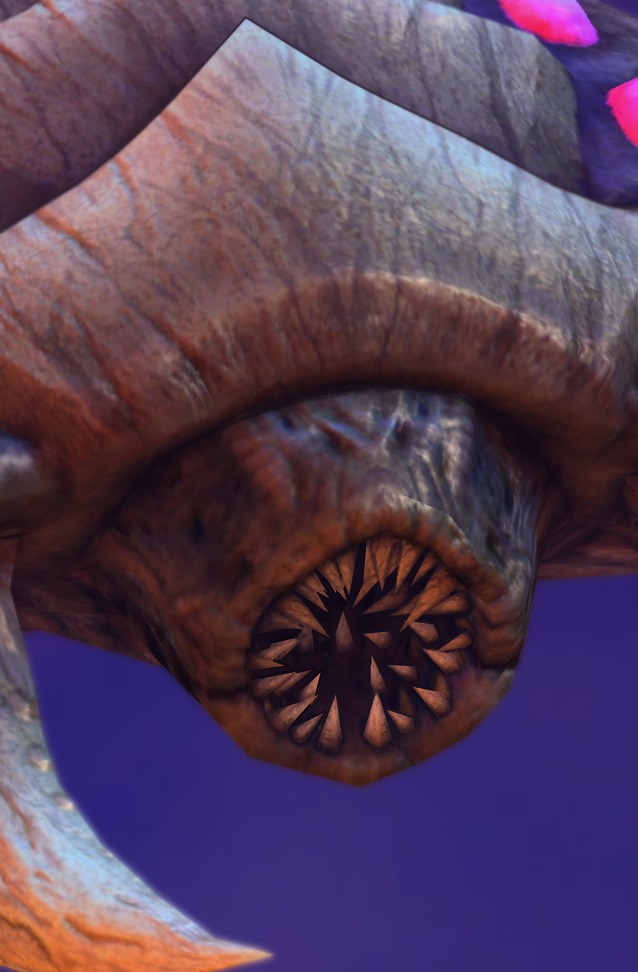
Broodlings are small but vicious and upon hatching, will attack any nearby enemies, attacking them until either they or the broodlings are destroyed. In the event that there are no nearby enemies, they await commands from a higher strain. Their effectiveness is primarily compromised, however, by their very limited lifespans.
Broodlings can spawn from Brood Lords' bombardment attacks (2 at a time), Flying Queen (2 at a time), or from destruction of major Zerg structures (6 to 12).
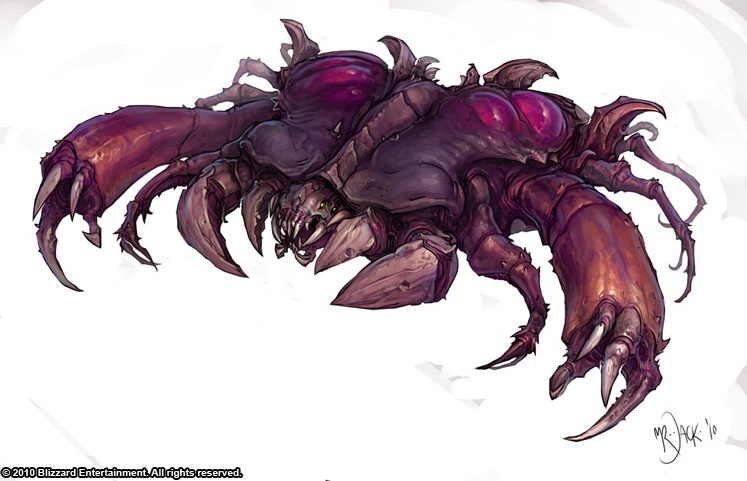
The guardian is evolved from the mutalisk. It possesses a thicker carapace than its counterpart and attacks by lobbing explosive globs of acid. The guardian is much slower than the mutalisk however, and is often designated to guard larvae. Despite being devastating in terrestrial combat, guardians are next to useless in space combat.
In comparison to the Brood Lord, Guardians' are more durable, but their attacks have shorter range than Brood Lords. Also, Brood Lords' attacks spawn Broodlings that can be used as distractions, while Guardians' acid bombardment is pure damage.
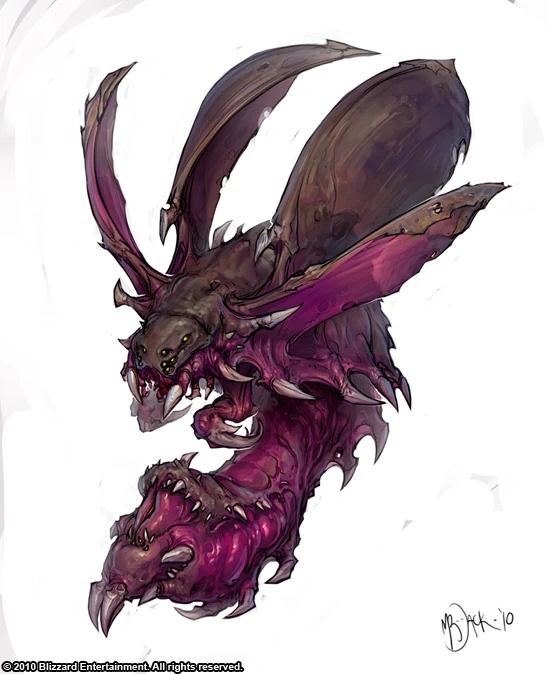
The devourer is a zerg anti-air flyer mutated from the Mutalisk. Devourers spit a venom of corrosive acid at aerial targets that can eat through the reinforced armor plating. A single spit of venom may splash over multiple targets, and the acid spores in the venom may hinder the fighting ability of the target.
Overlord
Image
Overlords were evolved from the Gargantis proximae, a species of giant space-faring and semi-intelligent creatures which volunteered to be assimilated in order to avoid extinction. Once assimilated, they were used to help cerebrates control and coordinate their broods and scout using their enhanced senses.
Overlords possess a large, bulbous brain which is protected by a heavily armored weave of bone and cartilage. It is a large organ, with millions of nerves and synaptic contacts. The overlord's cerebral structure is complex with neural pathways woven throughout the body; but is heavily concentrated in its lower section and legs. It is through this system that overlords relay commands to the Swarm.
Unlike most other zerg breeds, overlords have a greater capacity to act on their own judgement, though their mental flexibility is still severely limited. Overlords typically only relay orders. They are technically capable of directly controlling lesser zerg, but only with extreme difficulty. Overlords are fairly docile. Additional duties include tending to young larvae and monitoring the progress of drones through a type of instinctive telepathy.
Overlords with the correct growth stimuli can carry other zerg within hollows in their hides. In this form they become deep-space transports; the importance of their function is underlined by the sheer number of overlords found accompanying zerg forces. As spacefaring creatures, an overlord's carapace pressurizes and seals whenever the creature flies through vacuum. Overlords use helium-filled gas sacs and a weak telekinetic psi-ability for lift and motive power. This helium is generated through an efficient respiratory system distributed throughout the overlord's carapace. The excess helium is stored in thick sacs that contract and expand through rudimentary pulses, allowing overlords to regulate altitude and propulsion at will. They move quite slowly however.
Overlords could disgorge creep to prepare the way for zerg conquests. This creep is produced by the overlord liquifying its internal organs, with the creep being stored in multiple glands near the overlord's head. The process is instantaneous and takes place when space is needed for transportation of zerg ground strains. Overlords can regrow their organs at will, and can modify them to derive substance from inhospitable environments. Overlords can also metamorphose into Overseer.
Overseer
Image
Overseers are genetically-altered overlords that have a mass of additional sockets filled with highly evolved optical receptors with hypersensitive retinas. Unlike most other zerg breeds but like overlords, overseers have the ability to act with appropriate judgment, but are severely limited in their mental flexibility.
When the overlord is subjected to the overseer strain mutation, its eyes melt into a luminescent substance that floats inside a semi-transparent skull. Sensory tentacles and twin photoreceptors, capable of sight in any environment, sprout from said substance, in between the openings of their thick, armored "faceplate". To further enhance the creatures capabilities, the main body expands and grows six new hypersensitive optical receptors in strategic positions. This latest evolution allows the overseer to detect any hidden enemy units, including those that are burrowed underground or cloaked.
By incorporating terran DNA into the overseers genetic makeup (particularly during its later stages of pupation), the creature displays a peculiar evolution pattern. Its creep glands expand and turn into stores of sentient, unfertilized bio-matter, and its organs no longer liquefy into creep, but instead a nourishing paste. At the overseers will, this paste bonds with the bio-matter in the sacs and quickly becomes an insidious infiltrator known as the changeling. Additionally, the bio-matter grows and solidifies at exponential rates when exposed to foreign atmospheres. The Swarm has capitalized on this trait, using its overseers to disable critical facilities in the midst of an invasion.
Changeling
Image
The changeling, composed of a protoplasmic substance, is capable of shape-shifting into a form resembling a terran. It can shift between specific appearances. It can even send out psionic impressions leading terrans to believe that everything is "all right".
It is intelligent, capable of operating computers. It possesses more strength than an unarmored human and can transform part of its body into a deadly bone blade, although its primary purpose does not appear to be combat.
Mutalisk
Image
The mutalisk is an airborne zerg breed.
Mutalisks communicate in part through scent, by means of different musks derived from its biological processes. The gaseous by-product of these processes is stored in special sacs located throughout the creatures body, where it can be reserved for spaceflight propulsion. To survive in deep space, the mutalisk became self-sufficient. Every cell in its body is host to myriad bacteria that either produce chemicals or assimilate them in order to generate compounds for sustenance. New mutalisk strains present certain genetic alterations to their cellular flora, resulting in more efficient bio-processesto the point of tissue regenerating capabilities.
Mutalisks are carried aloft by leathery wings. These appendages afford the mutalisk an astonishing degree of speed and maneuverability during atmospheric flight. Wing motion also generates energy that serves as a catalyst for the creatures internal biological functions.
n battle, mutalisks form the primary flying forces of the zerg, making hit-and-run attacks against vulnerable installations and wheeling across the skies in prodigious numbers above zerg nests or land-based forces. Many attempted engagements with the zerg have collapsed due to the rapid arrival of large numbers of mutalisks before any meaningful air defense could be mustered. Under these circumstances the total loss of the forces involved is virtually guaranteed. Conversely, powerful air defenses have succeeded in keeping mutalisks at a distance, for the creatures are limited in vitality. However, they remain agile and dangerous opponents. In large numbers or against weak defenses, mutalisks will always be a deadly threat.
The mutalisk spawns small, voracious creatures called "glaive wurms", or "glave wurms", and projects these creatures to attack. Glaive wurms fly between multiple targets as they degrade explosively. The mutalisk's reproductive systemits ovipositorhas been adapted into a weapon delivery system.
When needed, Mutalisks can metamorph into two new aerial units: Guardian and Devourer.
Scourge
Image
Scourges are blind, suicidal fliers of unknown origin, seeking out enemy starships and diving into them. Catalytic agents within the scourge allow it to undergo a form of plasma metamorphosis, causing it to explode like a living bomb. A single scourge is capable of destroying a terran starfighter or shuttle and a handful can breach the hull of a starship. They are able to engage these targets in both air and the vacuum of space.
The primary drawback of the scourge is its limited ability to store energy, able to fly for barely a few hours without requiring additional substance. To conserve energy, they often perch on the backs of overlords. However, this presents a hazard, as the scourge's explosive nature can damage friendly zerg at this proximity.
Scourges possess a simple genetic makeup, allowing them to spawn in pairs from a single larva similar to that of zerglings.
Matriarch AKA Flying Queen
Image
Because of the difference of role between the Pre-Great War Queen and Post-Great War Queen, the Overmind has redubbed the Pre-Great War Queen as Matriarch or Flying Queen.
The Flying Queen possessed numerous tentacles, a sinuous head, and a stretched skin membrane. As with the overlords, queens were subordinated to the cerebrates to help administrate the Swarm.
On the battlefield, one of the flying queen's primary functions is to implant parasites in its enemies. Able to be launched from a distance, a tiny, remora-like parasite attached itself to the target, 'bonding' with it should the target be organic. The parasite allows higher zerg strains to see whatever the target sees. The parasite used to only be cured by killing the host, but years of dormant phase made flying queen's parasite weaker; it dies off after a few hours of living on the host, but has gained a new ability to allow the Zerg to talk to the host.
The Flying Queen can also emit thick mucus on an area, slowing down anything that is hit by the mucus. The mucus chemically deteriorates by itself after a short time. Compared to the Infestor's Fungal Growth ability, Fungal Growth makes the target immobile but the duration lasts shorter. Flying Queen's ensnare however stays on the target twice as longer as Fungal Growth does.
Viper
Image
A specialized support strain, the Viper is an aerial adaptation of Defilers.
The viper's tail is largely unchanged from the original defiler template. However, it has been evolved to allow the viper to maintain its balance and direction while flying, as well as steering. What truly stands out, however, are the ingrown, crystalline spikes on the tips surface. These "crystals" emit a powerful pulse that the Viper uses to locate its targets with pinpoint accuracy. Its limbs, while formiddable in appearance, are crippled in terms of offensive capability, as the Swarm relegated them to the role of simplistic vice-grips. When on the prowl, the spikes exude a pheromone that makes the viper seem innocuous and non-threatening to its hapless victims.
The viper combines several vicious biological weapons to weaken enemy forces and give an edge to the Swarm. Vipers store a thick microbial soup within their abdomens, and can spray the viscous mixture into the air whenever ranged foes approach, essentially nullifying the effectiveness of their armaments until they can move out of the cloying mist. Additionally, all vipers possess a prehensile proboscisan elongated organ that serves as the viper's digestive system, and one that runs the entire length of the creature's body. Just as a frog uses its tongue to catch prey, the viper regurgitates its flexible intestines with great force in order to grab and pull a target towards its location.
When fatigued, the viper can siphon bioelectrical energy and nutrients from friendly zerg buildings, allowing it to quickly return to the fray. This is achieved by separating the ionic chains present in the hardened tissues of Zerg nest structures to produce a nourishing fluid. Said fluid acts as a catalyst for the plethora of microorganisms present in its bloodstream, which generate bioelectrical energy to replenish the vipers stores.
Corruptor
Image
The corruptor was a squid-like zerg flying unit, with snapping beaks and dangling tentacles. The corruptor carries thick ink sacs that produces and stores parasite spores, an ink-like substance that disrupted matter at a molecular level. Any vehicles or personnel doused with this compound became very vulnerable, as the atomic chains that kept them together became brittle.
The corruptor's tentacles consisted of elongated muscle fibers laden with cancerous growths. As said growths increased in size, consuming the surrounding tissues in the process, they generated a powerful electromagnetic field that warped gravity around the creature, granting it flight. The corruptor's ability to fly was also aided by a statocysta pear-shaped gland that contained a solid, mineralized mass that floated in a low-density liquid. Its walls were coated in an impermeable substance of variable viscosity, and lined with small filaments. When the mineral core inside the gland shifted due to movement or orientation changes, the liquid and the filaments provided instant feedback to the corruptor, allowing it to maintain its balance and navigate both in atmospheric conditions and deep space.
The Corruptor can also metamorph into Brood Lord, losing its' air-to-air attack but gaining range and a new way to attack ground units.
Brood Lord
Image
Brood lords are massive manta-like flying creatures that serve the Swarm's aerial siege units and used only in the largest conflicts.
The brood lord releases biological symbiotes on ground targets. These small creatures regulate some of the brood lords biological functions, and can also serve as living ammunition. The brood lord has clusters of broodlings squirming under its carapace at any given time. In combat, the brood lord supercharges the broodlings aggression and metabolism, turning them into short-livedbut very effectiveair-to-ground weapons that tear through personal armor and vehicular plating with ease. However, brood lords themselves are not very durable, and are vulnerable against aerial-strike combatants.
Broodling
Image
Broodlings are small but vicious and upon hatching, will attack any nearby enemies, attacking them until either they or the broodlings are destroyed. In the event that there are no nearby enemies, they await commands from a higher strain. Their effectiveness is primarily compromised, however, by their very limited lifespans.
Broodlings can spawn from Brood Lords' bombardment attacks (2 at a time), Flying Queen (2 at a time), or from destruction of major Zerg structures (6 to 12).
Guardian
Image
The guardian is evolved from the mutalisk. It possesses a thicker carapace than its counterpart and attacks by lobbing explosive globs of acid. The guardian is much slower than the mutalisk however, and is often designated to guard larvae. Despite being devastating in terrestrial combat, guardians are next to useless in space combat.
In comparison to the Brood Lord, Guardians' are more durable, but their attacks have shorter range than Brood Lords. Also, Brood Lords' attacks spawn Broodlings that can be used as distractions, while Guardians' acid bombardment is pure damage.
Devourer
Image
The devourer is a zerg anti-air flyer mutated from the Mutalisk. Devourers spit a venom of corrosive acid at aerial targets that can eat through the reinforced armor plating. A single spit of venom may splash over multiple targets, and the acid spores in the venom may hinder the fighting ability of the target.
07/04/2015, 12:49 AM #6
I think I got my three characters for this RP, the beast duo are jacks of all trades so there will be something that they can do on most situations.
The third member will surely be Commander Shepard with her knowledge and experience from the Reaper war. She can be both in the frontline with her ability, or in the "control center" making strategies with the others
The third member will surely be Commander Shepard with her knowledge and experience from the Reaper war. She can be both in the frontline with her ability, or in the "control center" making strategies with the others
Have you ever crossed the line between sanity and madness? You would be amazed by what lies beyond the fog..
Spoiler
07/04/2015, 01:21 AM #7
Originally posted by Kristia
I think I got my three characters for this RP, the beast duo are jacks of all trades so there will be something that they can do on most situations.
The third member will surely be Commander Shepard with her knowledge and experience from the Reaper war. She can be both in the frontline with her ability, or in the "control center" making strategies with the others
I always preferred male Shep. (Though that might because i'm good friends with the voice actor in real life. Mark Meer's a cool dude.)


Sometimes when you're driving down a road, a bug hits your windshield. It's ugly and unpleasant, but you just activate the wipers / cleaning fluid and it's gone in a few seconds. It's just part of driving down the road. You don't dwell on it, because that'd be silly. Bugs aren't worth the time.
You just discard their guts and keep on driving.
07/04/2015, 07:13 PM #8
Information about Existing Zerg Defensive Buildings

Spine crawlers are ground defensive structures that can uproot and relocate. They can only plant themselves on the creep. The spine crawler will stop rooting itself if the creep under it recedes during the rooting process.
Like the spore crawler, the spine crawler will slowly die if rooted in ground not covered with creep. They can, however, survive indefinitely without creep as long as they are uprooted.
Spine Crawlers attack by contracting and extending its' tentacle laced with a sharp and durable bone spearhead. The speed of the tentacle lashing at its' unfortunate victim is comparable to a fastball, and can impale through an armored vehicle.
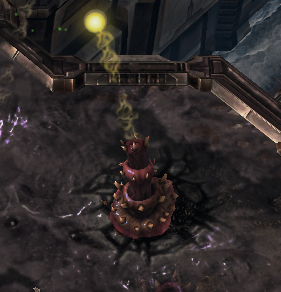
Spore crawlers are a mobile zerg anti-air defensive structure. Like the Spine Crawler, this structure can uproot and relocate, but can only plant themselves on the creep. Also like the spine crawler, the spore crawler will slowly die if rooted in ground not covered with creep.
Spore Crawlers attack by firing acidic ball of spore that can eat away at flesh but have trouble dissolving thick armor. They also possess hyperactive sensors around their body, allowing them to detect invisible foes like Overseers can.

The creep tumor is a structure which extends the creep. It resembles a cluster of boils protruding from the creep.
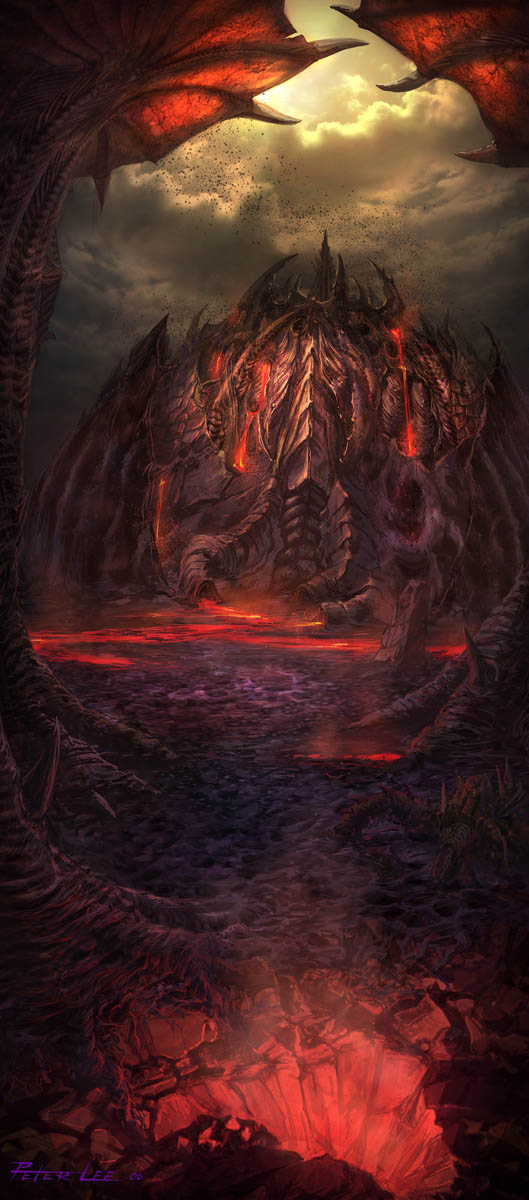
The hatchery is the foundational structure for every zerg colony.
Hatcheries perform three vital functions that no colony can survive without: producing the creep, which most zerg structures require in order to be built, giving birth to larvae that can mutate into the various zerg breeds and digesting minerals and vespene gas to change into a nutrient form that zerg can use to feed their mutations. In addition, the hatchery is one of the only structures that can be built without pre-existing creep (the other being the extractor) and is therefore essential for any expansion attempt.
The hatchery can metamorph into Lair, gaining size and larva production speed. With lair present, the Drones can start building more complex structures to gain local DNA strain for stronger Zerg warriors.
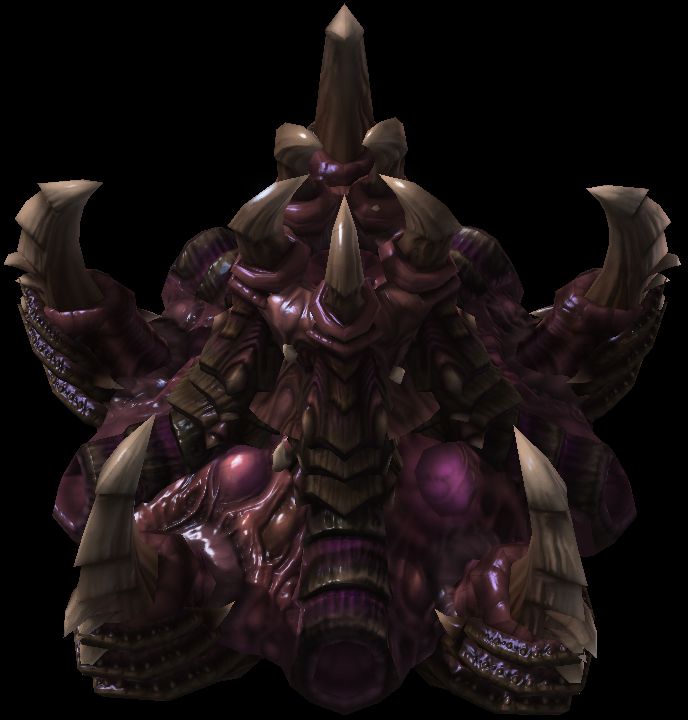
Lair gains faster larva production speed and tougher armor. It also allows for larger gene pool for the larvas it produces, allowing them to morph into stronger Zerg warriors.
Lair can metamorph into Hive, the final stage of Hatchery-level structure.
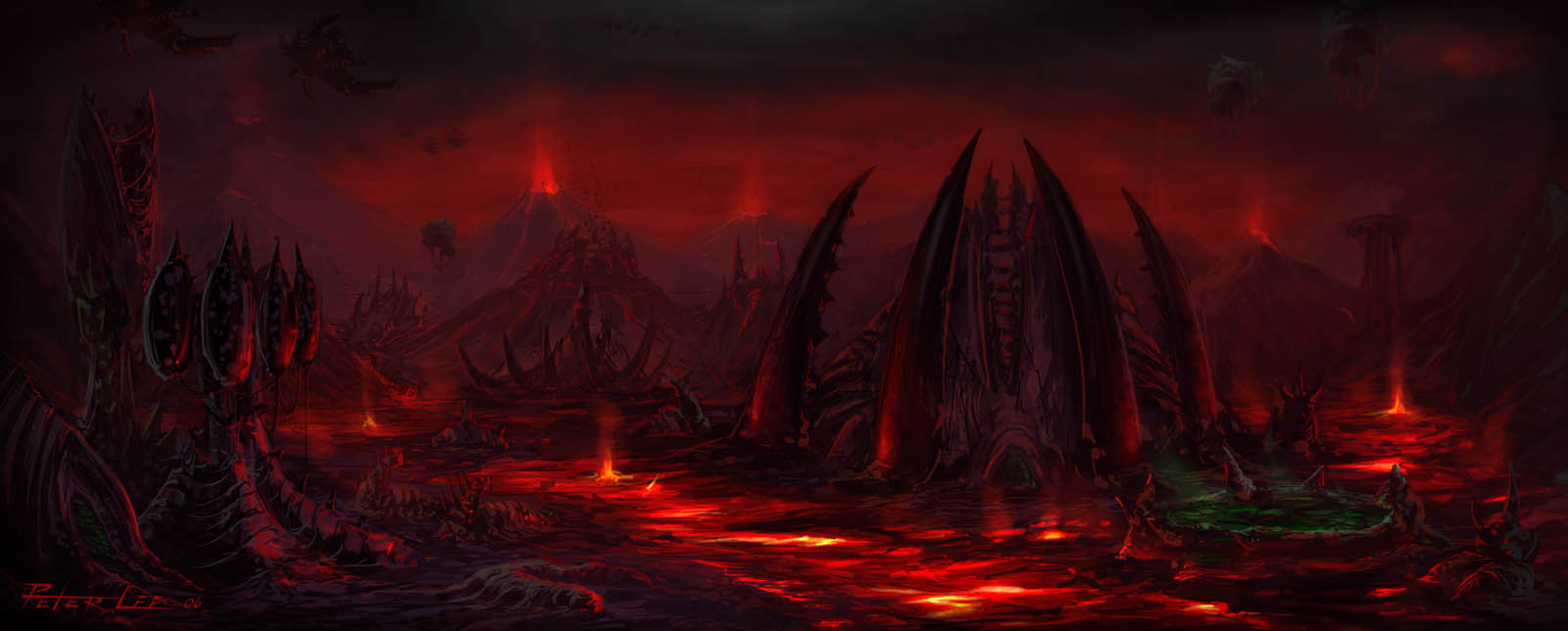
The hive is the primary structure of the zerg and is the key that unlocks the final stages of their evolution. Protected by a dense exoskeleton and granted full access to the Overmind's pool of knowledge, it continues to provide the same functionality that it has since it was a hatchery (birthing larvae, maintaining creep, and digesting minerals/gas). Once the hive is present, the being commanding it has the potential to unleash the full fury of the zerg.
Spine Crawler
Image
Spine crawlers are ground defensive structures that can uproot and relocate. They can only plant themselves on the creep. The spine crawler will stop rooting itself if the creep under it recedes during the rooting process.
Like the spore crawler, the spine crawler will slowly die if rooted in ground not covered with creep. They can, however, survive indefinitely without creep as long as they are uprooted.
Spine Crawlers attack by contracting and extending its' tentacle laced with a sharp and durable bone spearhead. The speed of the tentacle lashing at its' unfortunate victim is comparable to a fastball, and can impale through an armored vehicle.
Spore Crawler
Image
Spore crawlers are a mobile zerg anti-air defensive structure. Like the Spine Crawler, this structure can uproot and relocate, but can only plant themselves on the creep. Also like the spine crawler, the spore crawler will slowly die if rooted in ground not covered with creep.
Spore Crawlers attack by firing acidic ball of spore that can eat away at flesh but have trouble dissolving thick armor. They also possess hyperactive sensors around their body, allowing them to detect invisible foes like Overseers can.
Creep Tumor
Image
The creep tumor is a structure which extends the creep. It resembles a cluster of boils protruding from the creep.
Hatchery
Image
The hatchery is the foundational structure for every zerg colony.
Hatcheries perform three vital functions that no colony can survive without: producing the creep, which most zerg structures require in order to be built, giving birth to larvae that can mutate into the various zerg breeds and digesting minerals and vespene gas to change into a nutrient form that zerg can use to feed their mutations. In addition, the hatchery is one of the only structures that can be built without pre-existing creep (the other being the extractor) and is therefore essential for any expansion attempt.
The hatchery can metamorph into Lair, gaining size and larva production speed. With lair present, the Drones can start building more complex structures to gain local DNA strain for stronger Zerg warriors.
Lair
Image
Lair gains faster larva production speed and tougher armor. It also allows for larger gene pool for the larvas it produces, allowing them to morph into stronger Zerg warriors.
Lair can metamorph into Hive, the final stage of Hatchery-level structure.
Hive
Image
The hive is the primary structure of the zerg and is the key that unlocks the final stages of their evolution. Protected by a dense exoskeleton and granted full access to the Overmind's pool of knowledge, it continues to provide the same functionality that it has since it was a hatchery (birthing larvae, maintaining creep, and digesting minerals/gas). Once the hive is present, the being commanding it has the potential to unleash the full fury of the zerg.
07/04/2015, 07:23 PM #9
There are only two characters I will use in this RP and that's Chung (Tactical Trooper) and Raven (Veteran Commander) from Elsword, of whom are two characters I have in ATWAG (and are quite integral to some stuff in the London Arc.)
Wriggle told me to leave a link to the apps so here:
https://yukkuricraft.net/showthread.php?1588-OOC-Board-All-the-World-s-a-Game-Season-II
Remember it's just Chung and Raven I intend to use. However I do intend on modifying their apps with a few minor details to make it fit more into the plot of this RP. So check out this OOC thread Wriggle because I am working on just modifying/cleaning up their apps.
Wriggle told me to leave a link to the apps so here:
https://yukkuricraft.net/showthread.php?1588-OOC-Board-All-the-World-s-a-Game-Season-II
Remember it's just Chung and Raven I intend to use. However I do intend on modifying their apps with a few minor details to make it fit more into the plot of this RP. So check out this OOC thread Wriggle because I am working on just modifying/cleaning up their apps.
07/04/2015, 07:34 PM #10
I'll probably join in with Hank and Koishi. No idea where their original apps went, though. Might have to sift again, joy.
Oh, and Wriggs, is it fine if I use the Inventory for support characters, not full characters, they aren't the focus, of course, but just so I can use them if needed?
Oh, and Wriggs, is it fine if I use the Inventory for support characters, not full characters, they aren't the focus, of course, but just so I can use them if needed?
Sometimes when you're driving down a road, a bug hits your windshield. It's ugly and unpleasant, but you just activate the wipers / cleaning fluid and it's gone in a few seconds. It's just part of driving down the road. You don't dwell on it, because that'd be silly. Bugs aren't worth the time.
You just discard their guts and keep on driving.